

How to Make an Envelope Pillow Cover in 10 Minutes
This post may contain affiliate links. Please read our Disclosure Policy.
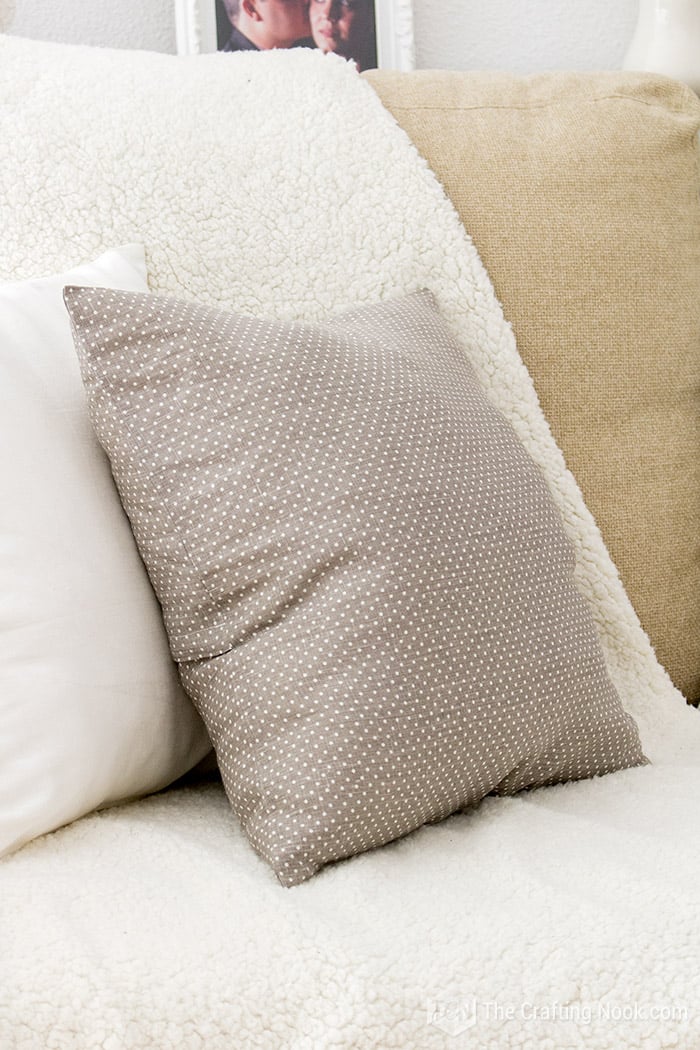
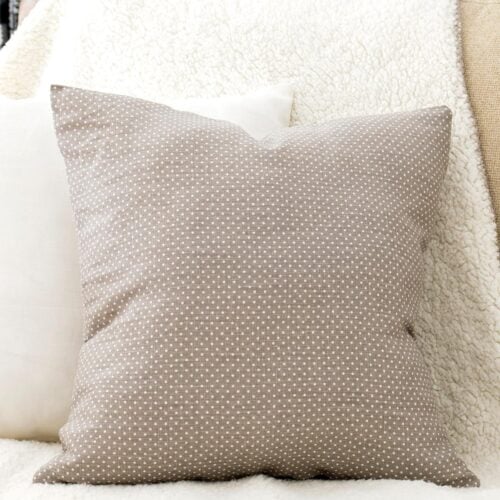
This easy envelope pillow cover is one of my favorite beginner sewing projects. It uses one continuous piece of fabric, comes together quickly, and makes it easy to change your pillows whenever you feel like giving a room a little update.
I’ve made many pillow covers using different methods ever since I started sewing, but this is the one I recommend when someone is learning to sew or wants a simple project without zippers, buttons, or several fabric pieces to line up.

Table of Contents
Easy One-Piece Envelope Pillow Cover
I’ve always loved decorating with pillows. They are one of the easiest ways to change the colors or feel of a room without replacing everything around them.
The problem is that buying new throw pillows every time you want a change can get expensive. Not mentioning the storage space needed. Making removable covers lets you keep the same pillow inserts and change only the fabric.
This envelope pillow cover is made from one long piece of fabric. The ends fold over one another on the back, creating an opening where you can slide the pillow insert in and out.
No zipper is needed, and there are only two main seams to sew after the ends have been hemmed.
I can usually sew one in about 10 minutes once the fabric has been measured and cut. Measuring, marking, and pressing may add a little extra time, especially the first few times you make one.

Why I Love This Pillow Cover Method SO Much
This is a great project to start with if you are still getting comfortable with your sewing machine.
- You can use the method with many fabrics and decorating styles.
- It is made from one piece of fabric.
- You only need to sew straight lines.
- There is no zipper or button closure.
- The cover can be removed and washed.
- The same formula works with different pillow sizes.
- You can adjust the fit before sewing the final seams.
You don’t even need a sewing machine. These pillow covers can be hand-sewn as well. It will take a little longer than using a machine, but the construction is simple and very doable.
I know this from experience. Before I owned a sewing machine, I hand-sewed an entire wall diaper stacker for my baby girl. It took more time, but it wasn’t difficult — just slower. The same applies here.
If you’d like, let me know in the comments and I can put together a simple hand-sewing tutorial too.

How to make an Envelope Pillow Cover
The printable how-to card is farther down in the post, but here is how I make the cover step by step.
I can usually make this envelope pillow cover in about 10 minutes on a sewing machine. If you’re sewing by hand, it will take a bit longer — but the steps are exactly the same.
Supplies:
- Your favorite fabric. I prefer using 100% cotton when teaching this project. It stays in place while you measure, folds neatly, and handles pressing well.
- A pillow insert (of course)
- Matching-color thread.
Tools:
- Sewing machine or needle (If you are going to hand-sew)
- Scissors or rolling cuter
- Measuring tape or ruler
- Fabric marker or chalk
- Cutting mat, if using a rotary cutter
- Straight pins or sewing clips
- Iron and ironing board
- Seam ripper
Instructions:
Envelope Pillow Cover Measurements
There is no printable pattern needed because the measurements are based on the size of your pillow insert.
I’ve used this percentage method for years, and it works for any square pillow size.
Start with fabric that is the same width as your pillow insert, plus the seam allowance for the top and bottom edges.
For the length, divide the fabric into three sections:
- The center section equals 100% of the pillow width.
- The first back section equals 75% of the pillow width.
- The second back section also equals 75% of the pillow width.
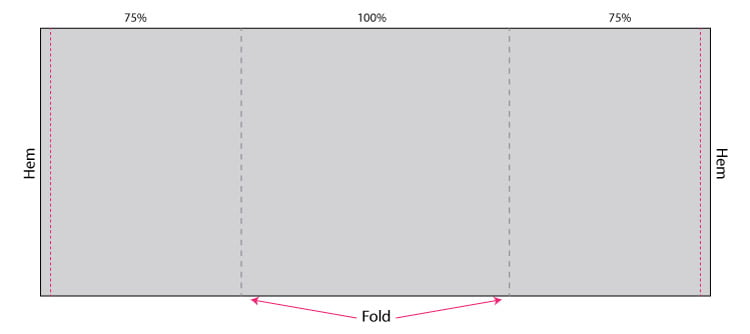
The two 75% sections include the fabric used for the end hems.
When both ends are folded toward the center, the two back sections overlap and create the envelope closure.
![This easy envelope pillow cover is one of my favorite beginner sewing projects. It uses one continuous piece of fabric, comes together quickly, and makes it easy to change your pillows whenever you feel like giving a room a little update.
I’ve made many pillow covers using different methods ever since I started sewing, but this is the one I recommend when someone is learning to sew or wants a simple project without zippers, buttons, or several fabric pieces to line up.
Easy One-Piece Envelope Pillow Cover
I’ve always loved decorating with pillows. They are one of the easiest ways to change the colors or feel of a room without replacing everything around them.
The problem is that buying new throw pillows every time you want a change can get expensive. Not mentioning the storage space needed. Making removable covers lets you keep the same pillow inserts and change only the fabric.
This envelope pillow cover is made from one long piece of fabric. The ends fold over one another on the back, creating an opening where you can slide the pillow insert in and out.
No zipper is needed, and there are only two main seams to sew after the ends have been hemmed.
I can usually sew one in about 10 minutes once the fabric has been measured and cut. Measuring, marking, and pressing may add a little extra time, especially the first few times you make one.
Why I Love This Pillow Cover Method SO Much
This is a great project to start with if you are still getting comfortable with your sewing machine.
You can use the method with many fabrics and decorating styles.
It is made from one piece of fabric.
You only need to sew straight lines.
There is no zipper or button closure.
The cover can be removed and washed.
The same formula works with different pillow sizes.
You can adjust the fit before sewing the final seams.
You don’t even need a sewing machine. These pillow covers can be hand-sewn as well. It will take a little longer than using a machine, but the construction is simple and very doable.
I know this from experience. Before I owned a sewing machine, I hand-sewed an entire wall diaper stacker for my baby girl. It took more time, but it wasn’t difficult — just slower. The same applies here.
If you’d like, let me know in the comments and I can put together a simple hand-sewing tutorial too.
How to make an Envelope Pillow Cover
The printable how-to card is farther down in the post, but here is how I make the cover step by step.
I can usually make this envelope pillow cover in about 10 minutes on a sewing machine. If you’re sewing by hand, it will take a bit longer — but the steps are exactly the same.
Supplies:
Your favorite fabric. I prefer using 100% cotton when teaching this project. It stays in place while you measure, folds neatly, and handles pressing well.
A pillow insert (of course)
Matching-color thread.
Tools:
Sewing machine or needle (If you are going to hand-sew)
Scissors or rolling cuter
Measuring tape or ruler
Fabric marker or chalk
Cutting mat, if using a rotary cutter
Straight pins or sewing clips
Iron and ironing board
Seam ripper
Instructions:
<div class="adthrive-video-player in-post" itemscope itemtype="https://schema.org/VideoObject" data-video-id=""bOX2sdBU"" data-player-type=""default"" orientation="" override-embed=""default"">
<meta itemprop="uploadDate" content=""2022-05-26T09:40:01.000Z"" />
<meta itemprop="name" content=""Easy" />
<meta itemprop="description" content=""This" />
<meta itemprop="thumbnailUrl" content="https://content.jwplatform.com/thumbs/"bOX2sdBU"-720.jpg" />
<meta itemprop="contentUrl" content="https://content.jwplatform.com/videos/"bOX2sdBU".mp4" />
</div>
Envelope Pillow Cover Measurements
There is no printable pattern needed because the measurements are based on the size of your pillow insert.
I’ve used this percentage method for years, and it works for any square pillow size.
Start with fabric that is the same width as your pillow insert, plus the seam allowance for the top and bottom edges.
For the length, divide the fabric into three sections:
The center section equals 100% of the pillow width.
The first back section equals 75% of the pillow width.
The second back section also equals 75% of the pillow width.
The two 75% sections include the fabric used for the end hems.
When both ends are folded toward the center, the two back sections overlap and create the envelope closure.
Example for an 18-Inch Pillow
For an 18-inch square pillow insert:
The center section measures 18 inches.
The first back section measures 13½ inches.
The second back section measures 13½ inches.
Together, the three sections measure 45 inches.
For the fabric width, add 1 inch total for two ½-inch seam allowances.
The final cutting size for an 18 x 18-inch pillow is approximately:
19 inches wide x 45 inches long
Example for a 45-Centimeter Pillow
For a 45 x 45-centimeter pillow insert:
The center section measures 45 centimeters.
The first back section measures 33.75 centimeters (You can round to 34cm).
The second back section measures 33.75 centimeters (You can round to 34cm).
Together, the three sections measure 112.5 centimeters (113cm).
For the fabric width, add 2 centimeters total for two 1-centimeter seam allowances.
The final cutting size for a 45 x 45-centimeter pillow is approximately:
47 centimeters wide x 112.5 centimeters long
You can round the fabric length up to 113 centimeters to make measuring and cutting easier.
Another Way to Calculate the Fabric Length
You can also look at the length formula this way:
Multiply the pillow width by 2.5.
For an 18-inch pillow: 18 x 2.5 = 45 inches
For a 45-centimeter pillow: 45 x 2.5 = 112.5 centimeters
Both methods give you the same result.
Use the percentage method if it helps you see how the front and two back sections are divided. Use the multiplication method when you simply want to calculate the full fabric length.
Want to Skip the Math?
I created a free Pillow Cover Size Calculator to make measuring easier. Choose your pillow insert size, and the calculator will help you figure out the fabric measurements before you start cutting.
[Get the Free Pillow Cover Size Calculator]
Step 1: Measure the Pillow Insert
Measure the width and height of the pillow insert itself.
Don't measure an old pillow cover. The fabric may have stretched, shrunk, or been made using a different seam allowance.
For a square pillow, the width and height will be the same.
For a rectangular pillow, use the pillow height to calculate the fabric width. Use the pillow width to calculate the three folding sections.
Step 2: Calculate and Cut the Fabric
Use the formula above to calculate the fabric length.
For the fabric width, add the top and bottom seam allowances to the height of the pillow insert.
Mark the measurements on the wrong side of the fabric using tailor’s chalk or a washable fabric marker.
Cut the fabric as straight as possible.
Note
A rotary cutter, acrylic ruler, and cutting mat make this step faster and usually give you cleaner edges. Scissors work too, but take your time and keep the fabric flat while cutting.
Step 3: Mark the Three Sections
Lay the fabric flat with the wrong side facing up.
Starting from one short end, mark the first 75% section.
Next, mark the center section, which should equal the full width of the pillow.
The remaining fabric will form the second 75% section.
These marks show you where the fabric will fold to create the front and overlapping back panels.
I recommend marking the fold lines lightly on the wrong side of the fabric. This makes it much easier to check the finished pillow width before sewing.
Step 4: Press the Fabric
Iron the fabric before sewing. You can technically skip this, but I don't recommend it. Wrinkled fabric makes measuring less accurate and can cause the hems or envelope opening to look crooked. Trust me, I learned the hard way.
Pressing also helps the marked fold lines stay easier to see.
Step 5: Hem Both Short Ends
The two short ends will become the finished edges of the envelope opening.
Fold one short edge toward the wrong side of the fabric.
I like a slightly wider finished hem, so I usually make mine just under 1 inch. Fold the raw edge under once, then fold it again so the cut edge is completely hidden.
Press the fold with the iron and hold it in place with pins or sewing clips.
Repeat the same process on the opposite short end.
Before sewing, place both hems next to one another and check that they are approximately the same width.
Sew a straight line close to the inner folded edge of each hem.
Both short ends should now look clean, with no raw fabric edges showing.
Step 6: Fold the Envelope Shape
Lay the fabric right side up.
Fold one 75% end section toward the center.
Fold the second 75% section over the first one.
The right sides of the fabric should now be facing one another, and the two finished hems should overlap across the back.
Use the marks you made earlier to guide the folds.
Check that the overlap is centered and that the final folded width matches the width of the pillow insert.
For an 18-inch insert, the folded cover should measure approximately 18 inches wide before sewing the top and bottom seams.
For a 45-centimeter insert, it should measure approximately 45 centimeters wide.
This check matters. It is much easier to adjust the folds now than to unpick the seams later.
Step 7: Pin the Top and Bottom Edges
Once the folded width is correct, pin or clip the top and bottom raw edges.
Make sure the fabric remains flat and that the back panels do not shift while you pin.
Place a pin near each finished hem. Those areas move the most when the pillow is inserted and removed, so they need to stay lined up.
Step 8: Sew the Top and Bottom Seams
Sew a straight seam along the top and bottom edges using your chosen seam allowance.
I normally use a ½-inch seam allowance, which is close to 1 centimeter.
Backstitch at the beginning and end of each seam.
I also backstitch over the areas where the finished hems meet the top and bottom seams. Those points receive the most stress when you open the cover and push the insert inside.
That extra reinforcement only takes a few seconds and helps the cover hold up much better.
Step 9: Finish the Raw Edges
Finish the top and bottom raw edges to help prevent fraying.
I usually sew a zigzag stitch close to the raw edge. A serger also works if you have one.
This may not be strictly necessary with every fabric, but I prefer finishing the seams because the cover will be removed and washed over time.
Step 10: Turn and Press the Cover
Turn the pillow cover right side out through the envelope opening.
Gently push out the four corners. You can use a blunt corner tool, chopstick, or the closed end of a pen, but do not push so hard that you poke through the fabric.
Press the cover flat, paying particular attention to the seams and back opening.
Step 11: Insert the Pillow
Fold the pillow insert slightly and push one side through the envelope opening.
Work the remaining corners into the cover, then adjust the insert until it sits evenly.
The back panels should overlap neatly without pulling open or exposing the pillow insert.
Now you have a removable throw pillow cover made from one piece of fabric.
Sewing Tips
This project is simple, but a few small details can make the finished cover look much cleaner.
Use Cotton Fabric for Your First Cover. Cotton is easier to measure, cut, press, and sew than slippery or stretchy fabric. Once you feel comfortable with the construction, you can try canvas, linen blends, upholstery fabric, velvet, or other materials.
Check the Fabric Direction Before Cutting. If the fabric has words, flowers, animals, or another directional print, make sure the design will face the correct way on the pillow front It is very easy to cut the piece sideways when working with one long rectangle.
Press Each Fold. Pressing takes a few extra minutes, but it helps the hems stay straight and prevents the fabric from shifting. The iron does almost as much work as the sewing machine in a project like this.
Check the Finished Width Before Sewing. After folding the envelope panels, measure the pillow cover again. The folded width should match your pillow insert. A snug fit usually looks better than a loose one, but the cover should not be so small that the seams pull apart.
Reinforce the Envelope Opening. Backstitch where the hemmed edges meet the top and bottom seams. These four points take most of the pressure when the pillow is inserted and removed.
Keep a Seam Ripper Nearby. Mistakes happen, even after years of sewing. Remove stitches slowly and work from the thread side whenever possible. Seam rippers are sharp and can cut the fabric if you rush.
Use a Fresh Needle. A dull or damaged needle can cause skipped stitches, fabric pulls, or uneven sewing. For regular cotton fabric, a universal sewing machine needle works well.
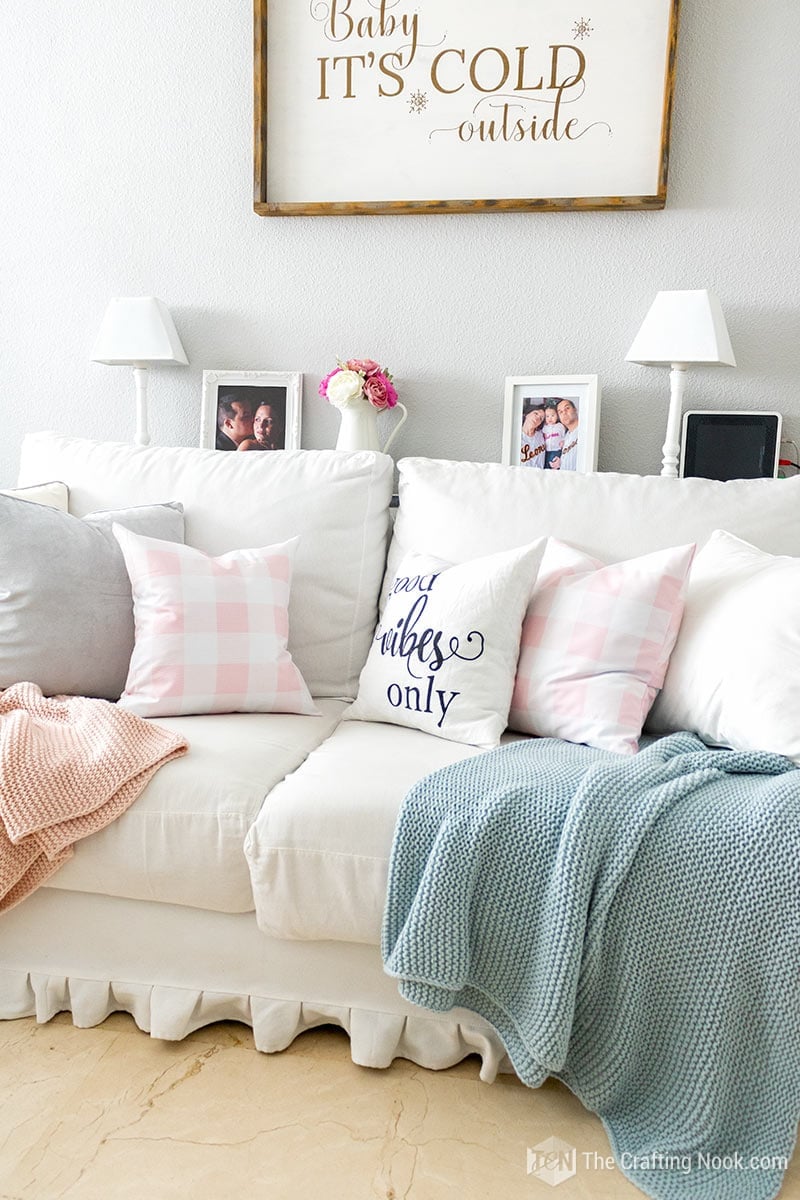
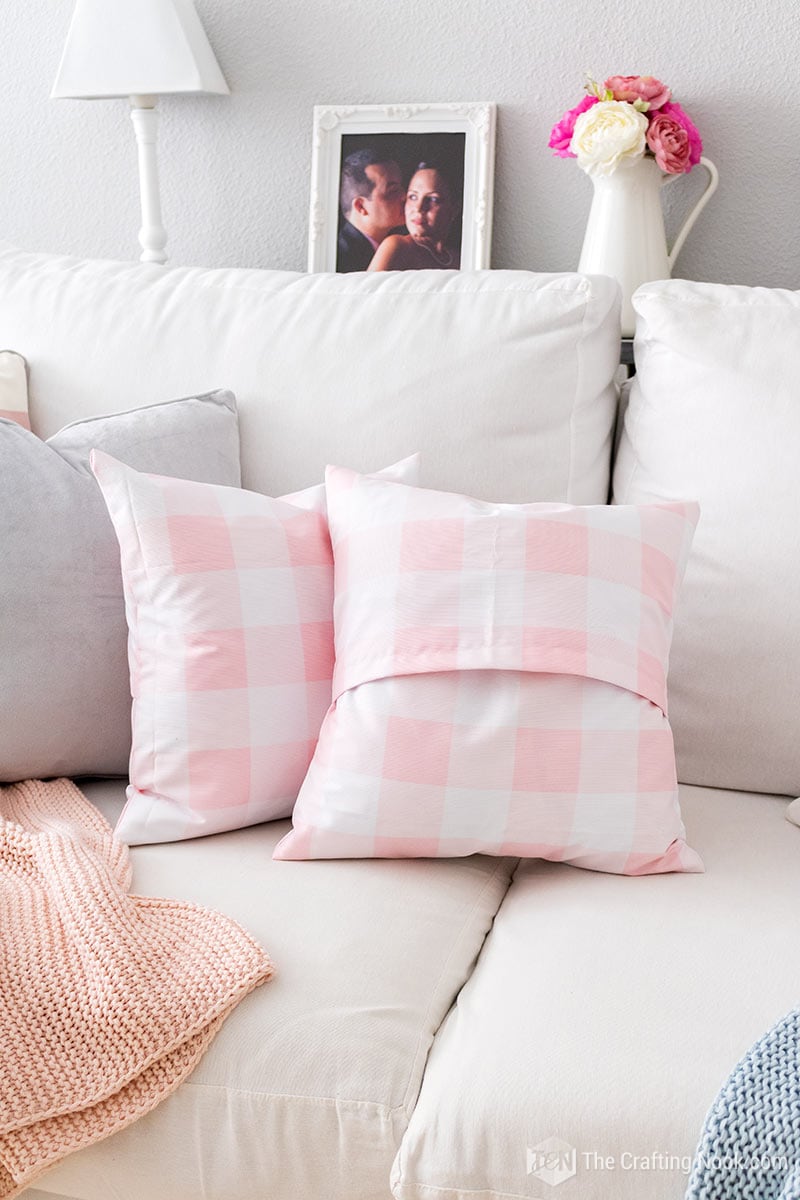
Once you’ve made one, it’s easy to make several more and start playing with different fabrics, stencils, or trims—just like I did.
Isn’t it pretty and easy?
I made another one stenciled and then another one part stripped and part solid with a cute tassel ribbon in between. SOOO cute!
You should try. I’ll be sharing the tutorial for these cute pillows and also how I make zipper pillow covers! So, stay tuned!
Common Mistakes to Avoid
Even a simple pillow cover can turn out crooked or loose if a few important steps are skipped.
Forgetting the Seam Allowance. The fabric width needs to include the seam allowance for both stitched edges. Without it, the finished pillow cover will be smaller than the insert.
Measuring an Old Pillow Cover. Measure the pillow insert itself, not another cover Old covers may have stretched, shrunk, or been made to fit differently.
Hemming the Ends After Folding. Hem both short ends before creating the envelope shape. Once the top and bottom seams are sewn, it will be much harder to finish those edges neatly.
Using Too Little Overlap. The overlapping panels should cover the back of the insert without pulling open. The 75% sections create a generous overlap, which is one reason this formula works so well.
Skipping the Final Measurement. Measure the folded cover before sewing the top and bottom. A small fold adjustment can fix the size without needing to recut the fabric.
Pulling the Fabric While Sewing. Let the feed dogs move the fabric through the sewing machine. Pulling the fabric from behind can stretch the seams and make the cover look uneven.
Easy Ways to Change the Look
Once you know how to make the basic cover, you can use the same construction with different details.
Mix Two Fabrics: join two coordinating fabrics before cutting the final rectangle. This can create a color-blocked or pieced pillow front while keeping the same envelope construction.
Add Trim to the Front: sew pom-pom trim, tassel ribbon, lace, or another decorative trim across the fabric before folding the pillow cover. Keep the trim away from the seam allowances so it does not create too much bulk.
Add a Stenciled Design: stencil a design or simple phrase onto the center front section before assembling the cover. Let the fabric paint dry completely and follow the manufacturer’s heat-setting instructions before sewing.
Use Seasonal Fabric: keep the same pillow inserts and make covers for different seasons or holidays. The covers take up far less storage space than complete throw pillows.
How to Wash an Envelope Pillow Cover
Remove the pillow insert before washing.
Wash the cover according to the care instructions for the fabric you used. Cotton covers can often be machine washed in cool or warm water, but printed or decorated fabrics may need gentler care.
Turn the cover inside out before washing to protect the outer surface.
I prefer air-drying handmade pillow covers when possible because high dryer heat can shrink cotton and make the cover fit more tightly.
Press the cover before putting the pillow insert back inside.
How to Store Extra Pillow Covers
Wash and dry the cover completely before storing it.
Fold it flat and keep it in a drawer, basket, or fabric storage box.
I like to store seasonal pillow covers together so I can find the whole group when I am changing decorations.
You can also place a small label on the folded cover with the pillow size. That saves you from trying several covers on the same insert later.
Frequently Asked Questions
What is an Envelope Pillowcase or Pillow cover? Envelope pillow covers have become very popular lately. While most pillowcases are open on the ends, an envelope pillowcase has a particular envelope closure at the back of the case that resembles an actual envelope. So, the pillow is tucked in and out of sight for a more finished look when decorating your couch or bed. How much fabric do I need for an envelope pillow cover? The amount of fabric depends on the size of your pillow insert. This method uses percentages based on the pillow width, so it works for any size without a fixed pattern. What fabric works best for envelope pillow covers? 100% cotton fabric is the easiest to work with, especially for beginners. It presses well, doesn’t slip, and holds its shape after sewing and washing. Should the Pillow Insert Be Larger Than the Cover? You can use a slightly larger insert if you prefer a fuller look. For beginners, I recommend making the finished cover approximately the same size as the insert. It gives you a snug fit without putting too much strain on the seams. Can I make this envelope pillow cover by hand? Yes, this pillow cover can be sewn by hand using a strong backstitch. It will take longer than using a sewing machine, but the construction is the same. Do envelope pillow covers need a zipper? No, envelope pillow covers do not use zippers. The overlapping back panels hold the pillow insert securely in place. What if My Pillow Cover Is Too Loose or Too Tight? If the cover is too loose, the fabric may have been cut too long or the folded front section may be wider than the pillow insert. You may be able to adjust the folds or take in the seams slightly.
If the cover is too tight, the seam allowances may not have been included or the fabric may have been cut too small.
Always measure the folded cover before sewing the final seams. That is the easiest time to correct the fit.
Keep Your Sewing Projects Organized
If you are working on more sewing projects, my Printable Sewing Binder gives you one place to keep measurements, fabric information, project notes, supply lists, and plans.
It is especially useful when you want to repeat a project later but cannot remember which fabric, needle, measurements, or adjustments you used the first time.
[Take a Look at the Printable Sewing Binder]
More Sewing Projects to Try
Like this Envelope Pillow Cover project? You might definitely love these other sewing project ideas too:
DIY 3-Pieces Envelope Pillowcase for Christmas
Easy Rustic Christmas Pillowcases with Freezer Paper
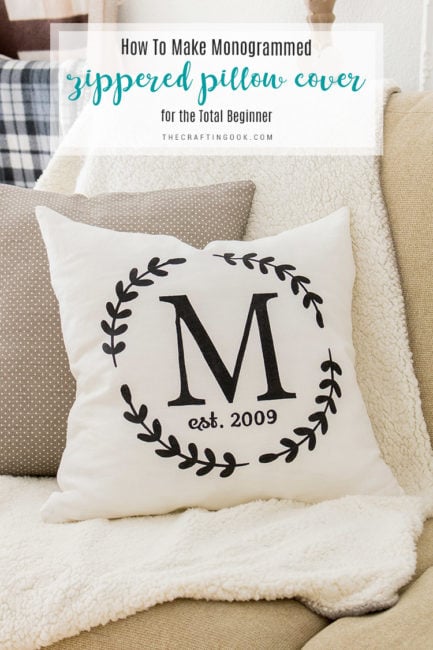
How to Make a Monogrammed Zippered Pillow Cover
Once you make your first envelope pillow cover, the next one will probably feel much faster.
It is a useful project for practicing measuring, hemming, pressing, and straight stitching without adding complicated sewing techniques.
Do not forget to grab the free Pillow Cover Size Calculator before starting your next cover.
If you make one (or a few), I would love to see it. Tag me on Instagram or Facebook or leave a comment below and tell me which fabric you used. A rating star and review help me reach more pillow lovers!
✂️ Tutorial
If you like this simple yet super fun and decorative project please share it with your friends!](https://thecraftingnook.com/wp-content/uploads/2018/07/Envelope-Pillow-Cover-Pattern-02.jpg)
Example for an 18-Inch Pillow
For an 18-inch square pillow insert:
- The center section measures 18 inches.
- The first back section measures 13½ inches.
- The second back section measures 13½ inches.
Together, the three sections measure 45 inches.
For the fabric width, add 1 inch total for two ½-inch seam allowances.
The final cutting size for an 18 x 18-inch pillow is approximately:
19 inches wide x 45 inches long
Example for a 45-Centimeter Pillow
For a 45 x 45-centimeter pillow insert:
- The center section measures 45 centimeters.
- The first back section measures 33.75 centimeters (You can round to 34cm).
- The second back section measures 33.75 centimeters (You can round to 34cm).
Together, the three sections measure 112.5 centimeters (113cm).
For the fabric width, add 2 centimeters total for two 1-centimeter seam allowances.
The final cutting size for a 45 x 45-centimeter pillow is approximately:
47 centimeters wide x 112.5 centimeters long
You can round the fabric length up to 113 centimeters to make measuring and cutting easier.
Another Way to Calculate the Fabric Length
You can also look at the length formula this way:
Multiply the pillow width by 2.5.
For an 18-inch pillow: 18 x 2.5 = 45 inches
For a 45-centimeter pillow: 45 x 2.5 = 112.5 centimeters
Both methods give you the same result.
Use the percentage method if it helps you see how the front and two back sections are divided. Use the multiplication method when you simply want to calculate the full fabric length.
Want to Skip the Math?
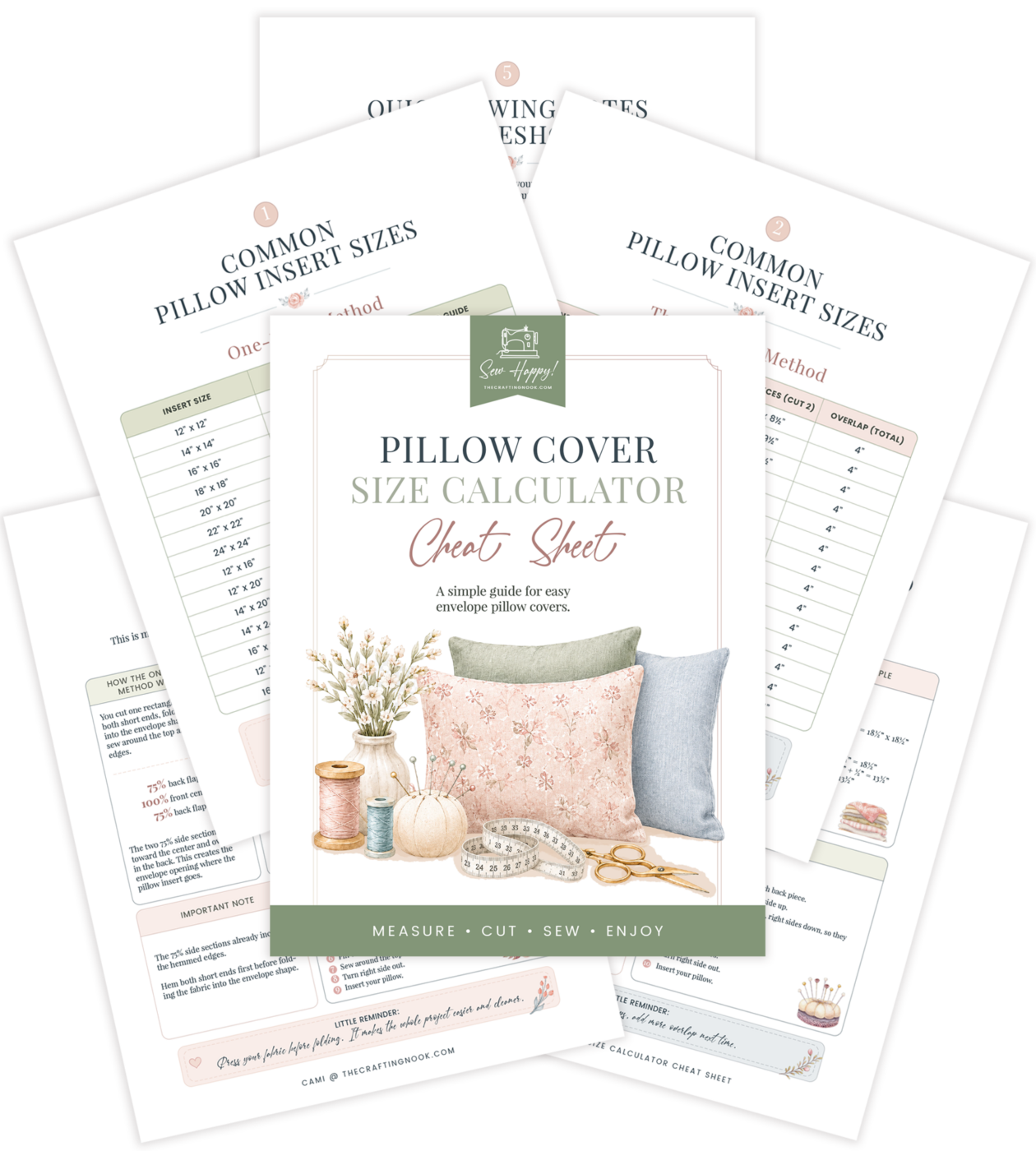
I created a free Pillow Cover Size Calculator to make measuring easier. Choose your pillow insert size, and the calculator will help you figure out the fabric measurements before you start cutting.
Step 1: Measure the Pillow Insert
Measure the width and height of the pillow insert itself.
Don’t measure an old pillow cover. The fabric may have stretched, shrunk, or been made using a different seam allowance.
For a square pillow, the width and height will be the same.
For a rectangular pillow, use the pillow height to calculate the fabric width. Use the pillow width to calculate the three folding sections.
Step 2: Calculate and Cut the Fabric
Use the formula above to calculate the fabric length.
For the fabric width, add the top and bottom seam allowances to the height of the pillow insert.
Mark the measurements on the wrong side of the fabric using tailor’s chalk or a washable fabric marker.
Cut the fabric as straight as possible.
Note
A rotary cutter, acrylic ruler, and cutting mat make this step faster and usually give you cleaner edges. Scissors work too, but take your time and keep the fabric flat while cutting.
Step 3: Mark the Three Sections
Lay the fabric flat with the wrong side facing up.
Starting from one short end, mark the first 75% section.
Next, mark the center section, which should equal the full width of the pillow.
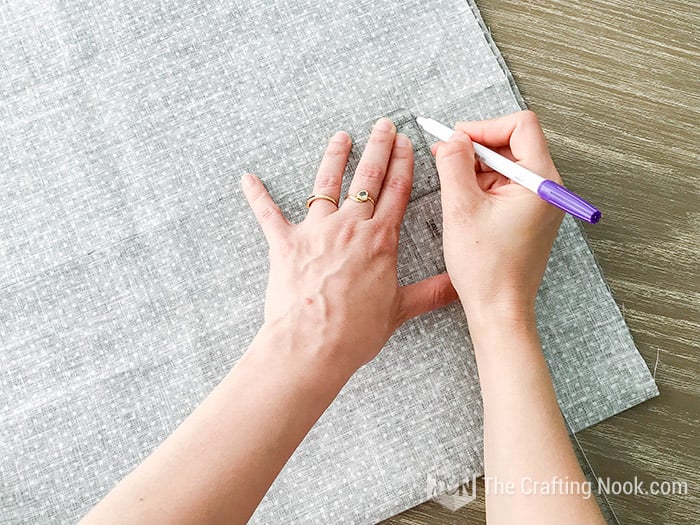
The remaining fabric will form the second 75% section.
These marks show you where the fabric will fold to create the front and overlapping back panels.
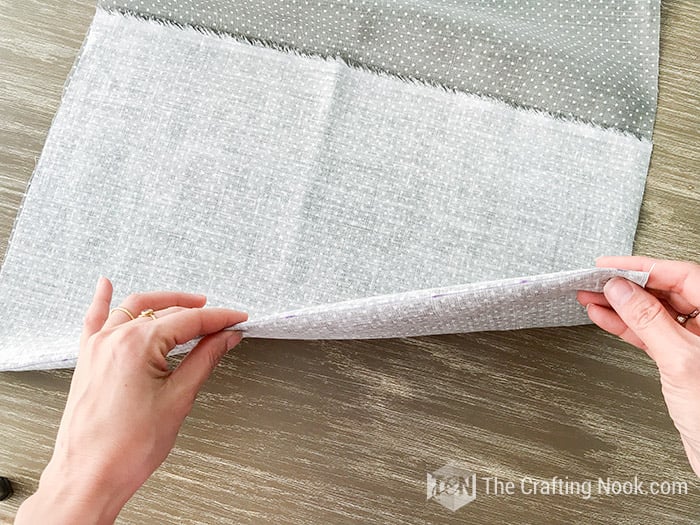
I recommend marking the fold lines lightly on the wrong side of the fabric. This makes it much easier to check the finished pillow width before sewing.
Step 4: Press the Fabric
Iron the fabric before sewing. You can technically skip this, but I don’t recommend it. Wrinkled fabric makes measuring less accurate and can cause the hems or envelope opening to look crooked. Trust me, I learned the hard way.
Pressing also helps the marked fold lines stay easier to see.
Step 5: Hem Both Short Ends
The two short ends will become the finished edges of the envelope opening.
Fold one short edge toward the wrong side of the fabric.
I like a slightly wider finished hem, so I usually make mine just under 1 inch. Fold the raw edge under once, then fold it again so the cut edge is completely hidden.
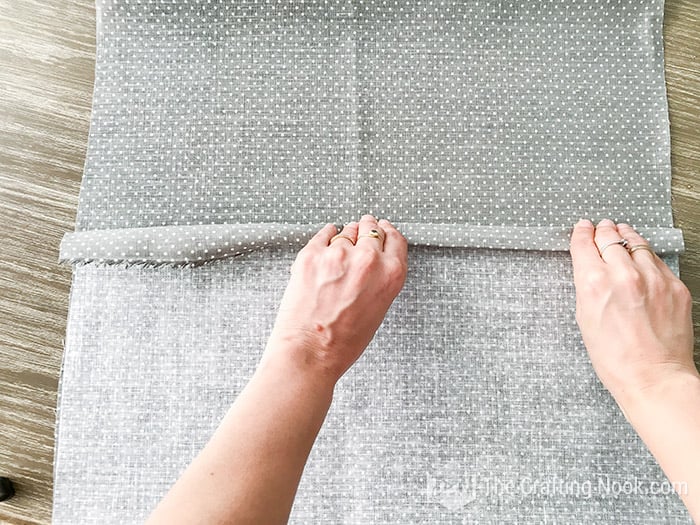
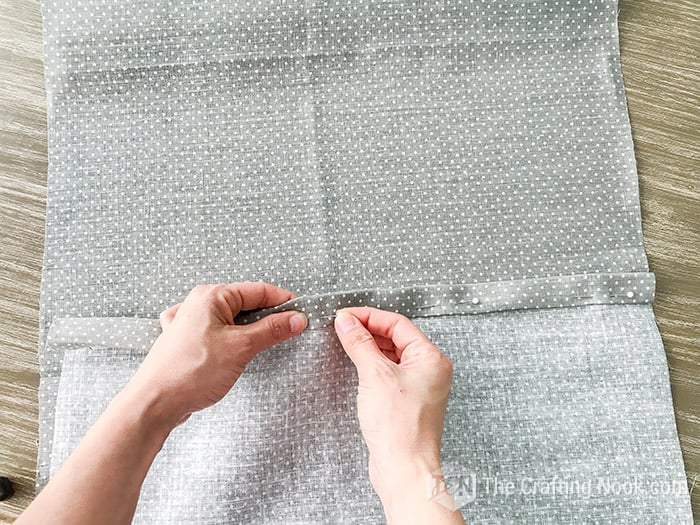
Press the fold with the iron and hold it in place with pins or sewing clips.
Repeat the same process on the opposite short end.
Before sewing, place both hems next to one another and check that they are approximately the same width.
Sew a straight line close to the inner folded edge of each hem.
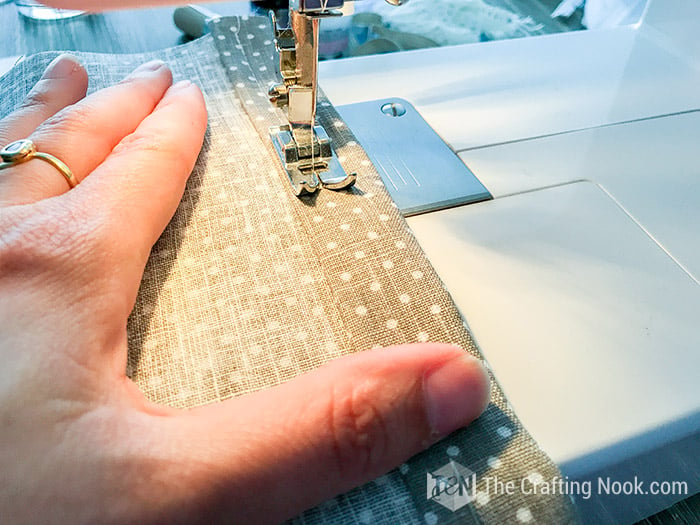
Both short ends should now look clean, with no raw fabric edges showing.
Step 6: Fold the Envelope Shape
Lay the fabric right side up.
Fold one 75% end section toward the center.
Fold the second 75% section over the first one.
The right sides of the fabric should now be facing one another, and the two finished hems should overlap across the back.
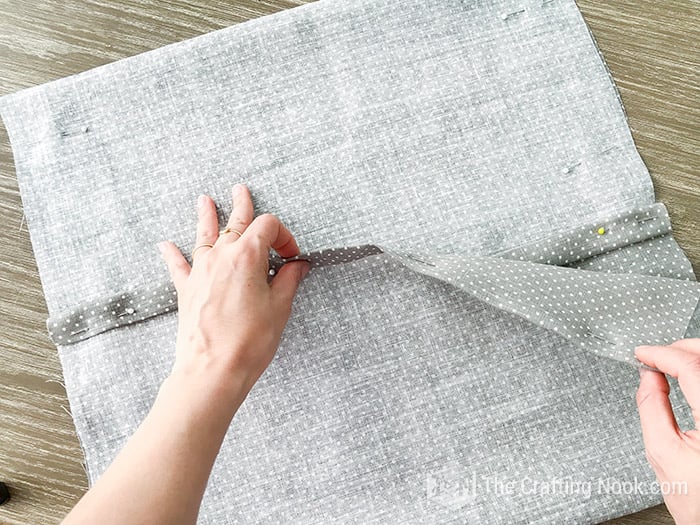
Use the marks you made earlier to guide the folds.
Check that the overlap is centered and that the final folded width matches the width of the pillow insert.
For an 18-inch insert, the folded cover should measure approximately 18 inches wide before sewing the top and bottom seams.
For a 45-centimeter insert, it should measure approximately 45 centimeters wide.
This check matters. It is much easier to adjust the folds now than to unpick the seams later.
Step 7: Pin the Top and Bottom Edges
Once the folded width is correct, pin or clip the top and bottom raw edges.
Make sure the fabric remains flat and that the back panels do not shift while you pin.
Place a pin near each finished hem. Those areas move the most when the pillow is inserted and removed, so they need to stay lined up.
Step 8: Sew the Top and Bottom Seams
Sew a straight seam along the top and bottom edges using your chosen seam allowance.
I normally use a ½-inch seam allowance, which is close to 1 centimeter.
Backstitch at the beginning and end of each seam.
I also backstitch over the areas where the finished hems meet the top and bottom seams. Those points receive the most stress when you open the cover and push the insert inside.
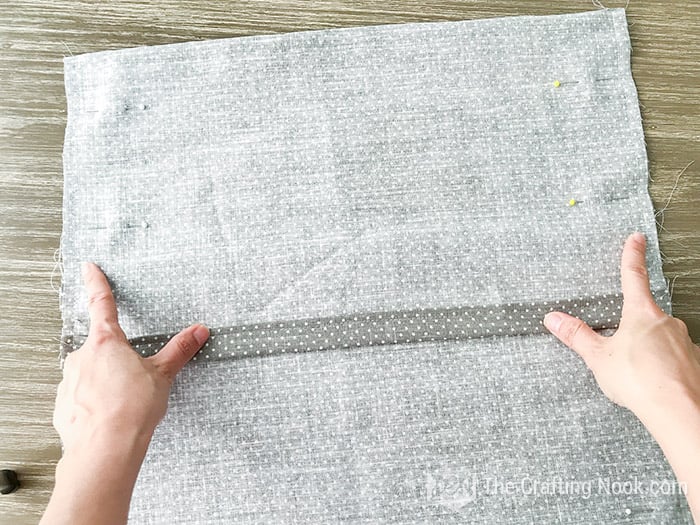
That extra reinforcement only takes a few seconds and helps the cover hold up much better.
Step 9: Finish the Raw Edges
Finish the top and bottom raw edges to help prevent fraying.
I usually sew a zigzag stitch close to the raw edge. A serger also works if you have one.
This may not be strictly necessary with every fabric, but I prefer finishing the seams because the cover will be removed and washed over time.
Step 10: Turn and Press the Cover
Turn the pillow cover right side out through the envelope opening.
Gently push out the four corners. You can use a blunt corner tool, chopstick, or the closed end of a pen, but do not push so hard that you poke through the fabric.
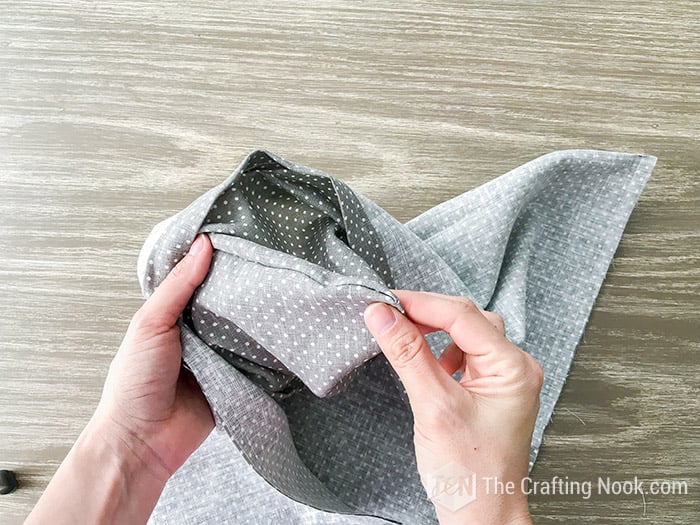
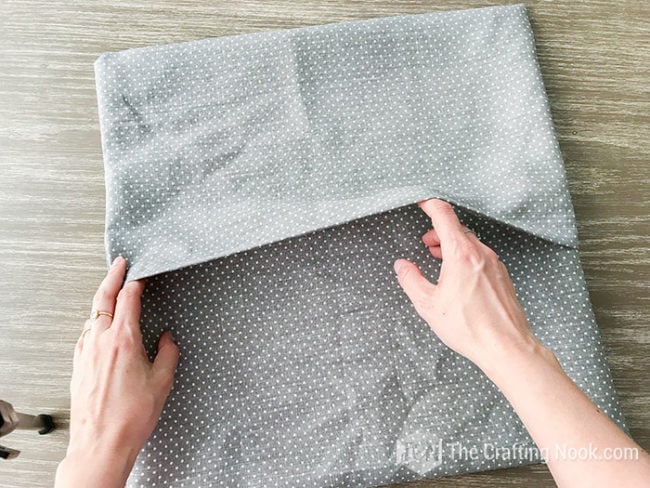
Press the cover flat, paying particular attention to the seams and back opening.
Step 11: Insert the Pillow
Fold the pillow insert slightly and push one side through the envelope opening.
Work the remaining corners into the cover, then adjust the insert until it sits evenly.
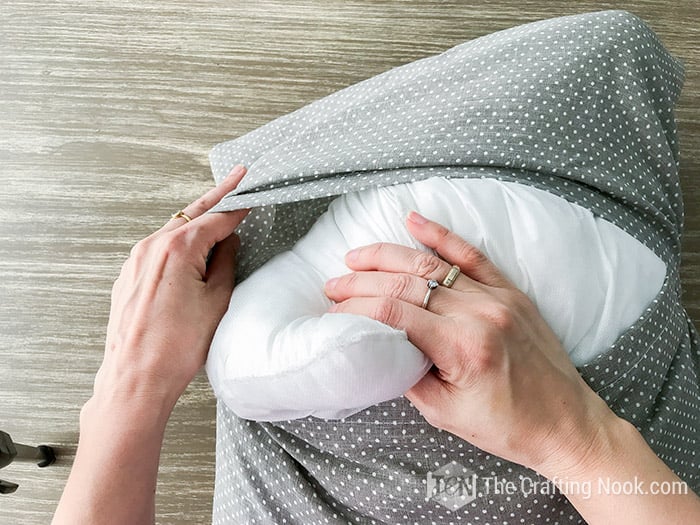
The back panels should overlap neatly without pulling open or exposing the pillow insert.
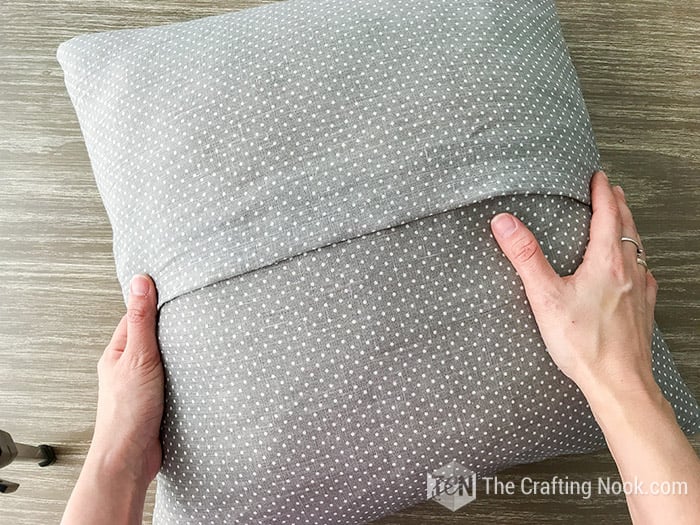
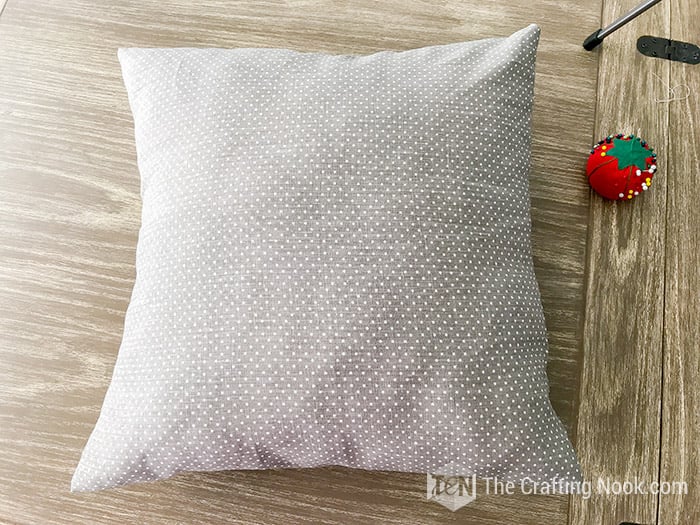
Now you have a removable throw pillow cover made from one piece of fabric.
Sewing Tips
This project is simple, but a few small details can make the finished cover look much cleaner.
- Use Cotton Fabric for Your First Cover. Cotton is easier to measure, cut, press, and sew than slippery or stretchy fabric. Once you feel comfortable with the construction, you can try canvas, linen blends, upholstery fabric, velvet, or other materials.
- Check the Fabric Direction Before Cutting. If the fabric has words, flowers, animals, or another directional print, make sure the design will face the correct way on the pillow front It is very easy to cut the piece sideways when working with one long rectangle.
- Press Each Fold. Pressing takes a few extra minutes, but it helps the hems stay straight and prevents the fabric from shifting. The iron does almost as much work as the sewing machine in a project like this.
- Check the Finished Width Before Sewing. After folding the envelope panels, measure the pillow cover again. The folded width should match your pillow insert. A snug fit usually looks better than a loose one, but the cover should not be so small that the seams pull apart.
- Reinforce the Envelope Opening. Backstitch where the hemmed edges meet the top and bottom seams. These four points take most of the pressure when the pillow is inserted and removed.
- Keep a Seam Ripper Nearby. Mistakes happen, even after years of sewing. Remove stitches slowly and work from the thread side whenever possible. Seam rippers are sharp and can cut the fabric if you rush.
- Use a Fresh Needle. A dull or damaged needle can cause skipped stitches, fabric pulls, or uneven sewing. For regular cotton fabric, a universal sewing machine needle works well.
Once you’ve made one, it’s easy to make several more and start playing with different fabrics, stencils, or trims—just like I did.
I made another one stenciled and then another one part stripped and part solid with a cute tassel ribbon in between. SOOO cute!
Isn’t it pretty and easy?

You should try. I’ll be sharing the tutorial for these cute pillows and also how I make zipper pillow covers! So, stay tuned!
Common Mistakes to Avoid
Even a simple pillow cover can turn out crooked or loose if a few important steps are skipped.
- Forgetting the Seam Allowance. The fabric width needs to include the seam allowance for both stitched edges. Without it, the finished pillow cover will be smaller than the insert.
- Measuring an Old Pillow Cover. Measure the pillow insert itself, not another cover Old covers may have stretched, shrunk, or been made to fit differently.
- Hemming the Ends After Folding. Hem both short ends before creating the envelope shape. Once the top and bottom seams are sewn, it will be much harder to finish those edges neatly.
- Using Too Little Overlap. The overlapping panels should cover the back of the insert without pulling open. The 75% sections create a generous overlap, which is one reason this formula works so well.
- Skipping the Final Measurement. Measure the folded cover before sewing the top and bottom. A small fold adjustment can fix the size without needing to recut the fabric.
- Pulling the Fabric While Sewing. Let the feed dogs move the fabric through the sewing machine. Pulling the fabric from behind can stretch the seams and make the cover look uneven.
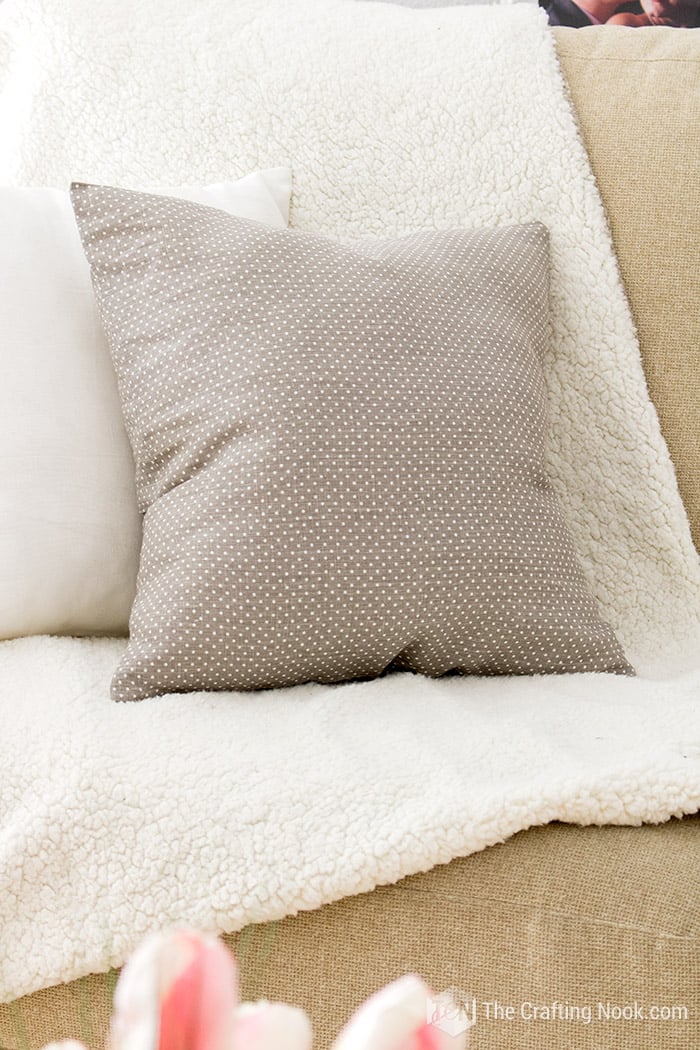
Easy Ways to Change the Look
Once you know how to make the basic cover, you can use the same construction with different details.
Mix Two Fabrics: join two coordinating fabrics before cutting the final rectangle. This can create a color-blocked or pieced pillow front while keeping the same envelope construction.
Add Trim to the Front: sew pom-pom trim, tassel ribbon, lace, or another decorative trim across the fabric before folding the pillow cover. Keep the trim away from the seam allowances so it does not create too much bulk.
Add a Stenciled Design: stencil a design or simple phrase onto the center front section before assembling the cover. Let the fabric paint dry completely and follow the manufacturer’s heat-setting instructions before sewing.
Use Seasonal Fabric: keep the same pillow inserts and make covers for different seasons or holidays. The covers take up far less storage space than complete throw pillows.
How to Wash an Envelope Pillow Cover
Remove the pillow insert before washing.
Wash the cover according to the care instructions for the fabric you used. Cotton covers can often be machine washed in cool or warm water, but printed or decorated fabrics may need gentler care.
Turn the cover inside out before washing to protect the outer surface.
I prefer air-drying handmade pillow covers when possible because high dryer heat can shrink cotton and make the cover fit more tightly.
Press the cover before putting the pillow insert back inside.
How to Store Extra Pillow Covers
Wash and dry the cover completely before storing it.
Fold it flat and keep it in a drawer, basket, or fabric storage box.
I like to store seasonal pillow covers together so I can find the whole group when I am changing decorations.
You can also place a small label on the folded cover with the pillow size. That saves you from trying several covers on the same insert later.
Frequently Asked Questions
Envelope pillow covers have become very popular lately. While most pillowcases are open on the ends, an envelope pillowcase has a particular envelope closure at the back of the case that resembles an actual envelope. So, the pillow is tucked in and out of sight for a more finished look when decorating your couch or bed.
The amount of fabric depends on the size of your pillow insert. This method uses percentages based on the pillow width, so it works for any size without a fixed pattern.
100% cotton fabric is the easiest to work with, especially for beginners. It presses well, doesn’t slip, and holds its shape after sewing and washing.
You can use a slightly larger insert if you prefer a fuller look. For beginners, I recommend making the finished cover approximately the same size as the insert. It gives you a snug fit without putting too much strain on the seams.
Yes, this pillow cover can be sewn by hand using a strong backstitch. It will take longer than using a sewing machine, but the construction is the same.
No, envelope pillow covers do not use zippers. The overlapping back panels hold the pillow insert securely in place.
If the cover is too loose, the fabric may have been cut too long or the folded front section may be wider than the pillow insert. You may be able to adjust the folds or take in the seams slightly.
If the cover is too tight, the seam allowances may not have been included or the fabric may have been cut too small.
Always measure the folded cover before sewing the final seams. That is the easiest time to correct the fit.
More Sewing Projects to Try
Like this Envelope Pillow Cover project? You might definitely love these other sewing project ideas too:
Once you make your first envelope pillow cover, the next one will probably feel much faster.
It is a useful project for practicing measuring, hemming, pressing, and straight stitching without adding complicated sewing techniques.
Do not forget to grab the free Pillow Cover Size Calculator before starting your next cover.
If you make one (or a few), I would love to see it. Tag me on Instagram or Facebook or leave a comment below and tell me which fabric you used. A rating star and review help me reach more pillow lovers!
✂️ Tutorial
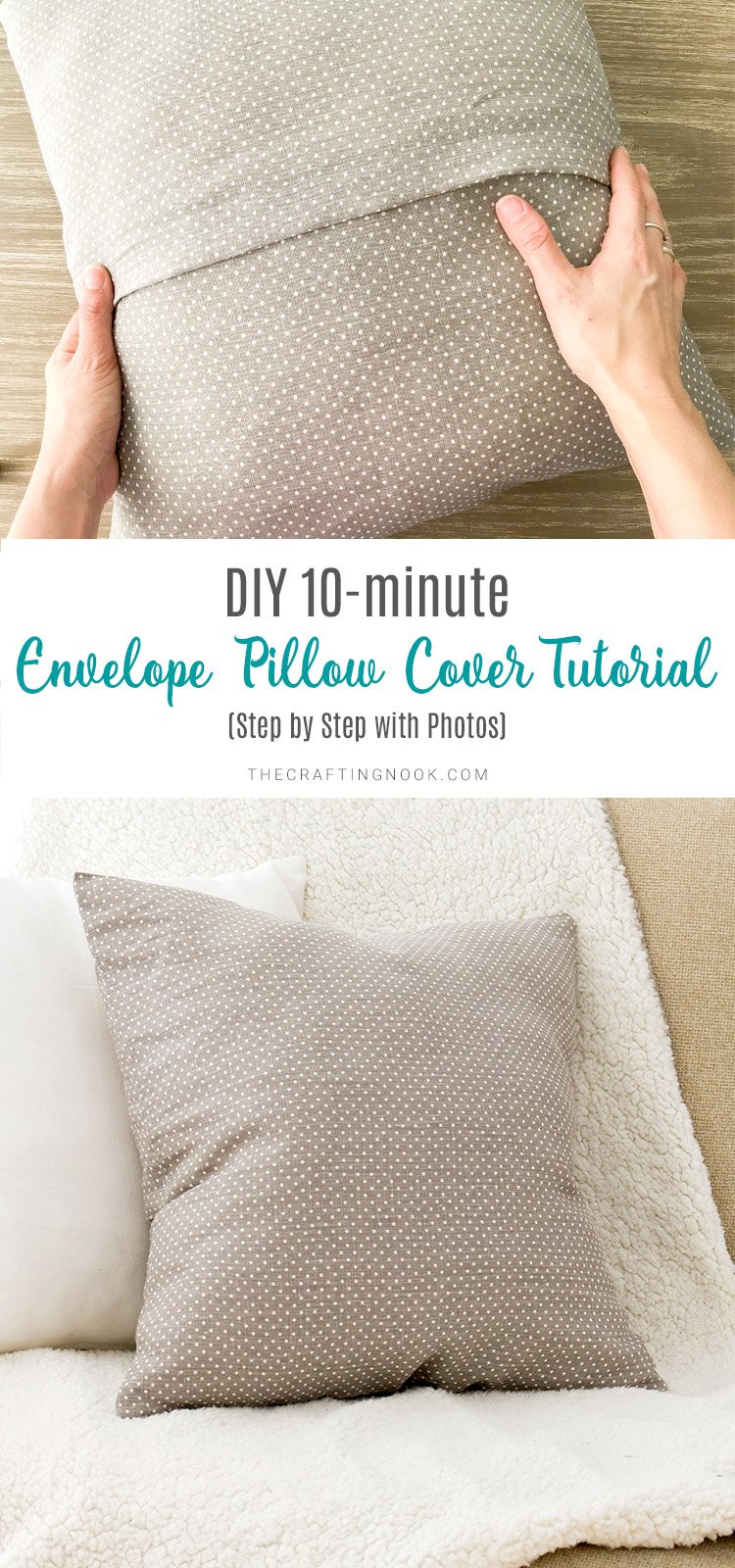
DIY 10-minute Envelope Pillow Cover Tutorial

Tools
- Sewing machine or hand-sewing needle
- Measuring tape or ruler
- Fabric marker or tailor’s chalk
- Fabric scissors or rotary cutter
- Cutting mat, if using a rotary cutter
- Straight pins or sewing clips
- Iron and ironing board
Supplies
- Fabric
- Pillow insert
- Matching thread
Instructions
- Measure the width and height of the pillow insert.
- Add the top and bottom seam allowances to the pillow height to calculate the fabric width.
- Calculate the fabric length using three sections: 75% of the pillow width, 100% of the pillow width, and another 75%.
- You can also multiply the pillow width by 2.5 to calculate the total fabric length.
- Cut the fabric and mark the three folding sections.
- Fold and press both short ends twice to hide the raw edges.
- Sew a straight line along both finished hems.
- Lay the fabric right side up and fold both end sections toward the center, overlapping them across the back.
- Check that the folded width matches the width of the pillow insert.
- Pin the top and bottom raw edges.
- Sew both edges using a ½-inch or 1-centimeter seam allowance. Reinforce the areas near the envelope opening with a backstitch.
- Finish the raw edges with a zigzag stitch or serger.
- Turn the cover right side out and press it flat.
- Insert the pillow and adjust the corners.
Video

Notes
- The 10-minute sewing time begins after the fabric has been measured and cut.
- For an 18 x 18-inch insert, cut the fabric approximately 19 inches wide by 45 inches long when using a ½-inch seam allowance.
- For a 45 x 45-centimeter insert, cut the fabric approximately 47 centimeters wide by 112.5 centimeters long when using a 1-centimeter seam allowance.
- Use the free Pillow Cover Size Calculator if you would like help calculating the measurements for another pillow size.
If you like this simple yet super fun and decorative project please share it with your friends!
Til’ next time…

The Home Sewing Project Binder
Keep Your Sewing Projects Organized
If you are working on more sewing projects, my Printable Sewing Binder gives you one place to keep measurements, fabric information, project notes, supply lists, and plans. It is especially useful when you want to repeat a project later but cannot remember which fabric, needle, measurements, or adjustments you used the first time.
Wouldn’t a 16” cushion be 17” top to bottom to allow for seam allowance?
You are actually right, although I wouldn’t leave a whole inch for seam allowance, mayve half. When it comes to pillow covers I like them tight so the insert snug nicely. I will adjust this to the post itself. Thank you so much for your feedback!
Hugs.
I love this idea and am going to use it for a body pillow. My favorite pillow cover is slowly fading away (it’s nearly 15 years old!) and I can’t find any covers in the fabric, color or print I want so…. I went and bought a couple of yards of fabric I like -on clearance no less- and was looking for a way to make it without a zipper. I don’t try to sew in zippers. LOL This envelop-style will do just fine with a bit of modification. I’ll have to figure out how to make the envelop part closer to the end of the pillow to make it easier to get the cover on and off. I really like the idea of using one piece of fabric too! Thank you for sharing this so I can make my next most favorite body pillow cover. :)
Hi Dawn,
Thank you so so much for your kind words. This pillow cover is very simple to put together and one of my favorites too. Wherever you set the opening I can assure you, it’s not hard to get the cover on and off. However, it’s a good idea to maybe work on a variation of it. I might work on it the next chance I get!
Again thank you for taking the time to leave your thoughts! You made my day!
Sending warm hugs!
Cami.
This was so easily to make Camila! I like that you came up with a pattern that’s just one piece of fabric, so I can ensure the back pieces are always facing the correct way.
Thank you so much Sharon! I sp appreciate your kind words and I’m super glad you found it helpful!!!
Now let’s make a bunch LOL!
Hugs
Love these pillows! I’m confused on the instructions when you talk about width and length because the example uses a square pillow, i can’t tell which measurement is the length and which is the width. Or if you could give the numbers in that example of the measurement of the whole piece of fabric you cut? Thank you.
Hi Stacey,
ok So, unless it’s rounded it doesn’t matter if it’s squared or rectangle, we talk about width and height. Which one is which is totally up to you when it comes to the pillow. When you are going to measure the fabric, by the rule of thumb the width is the longest and height is the shortest. I can’t give you a specific number because your pillow might be larger or smaller. That’s white I give percentages and an example with one pillow size, so you can apply that to your own pillow. If you read it all you will see I included graphics illustrating how you will measure and how your fabric should look like and be divided in.
Hope this clarifies a bit things for you.
Happy new Year!!!
I would like a recommendation as to the type of pillow insert for a patio back cushion. I want soft and not very firm.
Hey Cindy, happy to have you visiting!
To be honest, I wouldn’t know. I have never made any cushion for the outdoors. I guess that if you are not planning on leaving the cushions out all the time you can use any cushion you love, I personally love feathers LOL.
Sorry I can’t be more helpful!
have a wonderful day!
Will this work for a large square pillow. Also how would you do this by hand?
Hi Brandy, Yes, you can do this for any size if you follow the percentages. I have handsewn a few projects back when I didn’t have a sewing machine it is doable. Google some hand-sew tutorials (this is actually something I haven’t done but should) and I am sure you will find good ones.
Hope this helps!
Could not find video for 10 minute envelope pillowcase.
Hey Sharon, Sorry about that. This post doesn’t have any video yet although I’m working on creating one soon.
Thank you for stopping by!
hugs
my body pillow is 38 inches long by 26inches
I’m sorry, not sure what’s the question. If it’s about the size of the fabric, just follow the formula shared on the post and you should be good to go!
Hugs
Does this work for rectangular pillows too?
Of course! The process is the same you just need to adjust the back measurements. For example: If the pillow is 12″ X 24″ I would cut the fabric 12″ X 56″. Follow the percentages described in the graphics in the post.
Hope this helps!
Merry Christmas!!!!
Thank you ! Merry Christmas to you as well!
Cami, what beautiful pillows! You are very talented! Thanks for the simplicity of your technique. Unfortunately, I don’t have a sewing machine because I do very little sewing! Could you please post, or send me instructions on how to hand-sew this pillow!! Again, thanks so much!
Hi Lisa,
Thank you so so much for your kind words. I completely understand your point. I started hand-sewing because I didn’t have a machine. I can definitely create a post for hand-sewing but I can’t right now, it would take a couple weeks since I’m having some visit over for almost a week. what I can do for now, is giving you 2 posts I’ve done that I’ve used techniques to non-sewing machine projects. One is using heat n’Bond which I would use for the hems. if you are not familiar with that, heat n’ Bond is like double-sided tape but for fabric. This post explains how to use it. And then for the stitches, I made some fabric pumpkins last year and I used hand-sewing for that and even made a video. You can see the post here check the second pumpkin. Following the same instructions here but instead of sewing machine use heat and bond for the hems and hand-sewing for the side stitches. I would love to have step by step instructions to help you specifically for this right away but I truly can’t But I will create a post for hand-sewing as soon as I can and I’ll let you know!
Again thank you so much for your lovely comment and taking the time to contact me.
Hugs
Such a great tutorial, I’ll be making a lot of these soon for my first apartment! xoxo
Your comment just made my day! Thank you so much! I’m sure you will get hooked. You have no idea how many pillow covers I’ve made already LOL. I would love to see your pillows once you have them done!!!
Hugs and good luck!
Made one and it turned out perfectly! Now on to the next three. Thanks so much!
SOOOO glad to hear that!!!! you made my day!
I’ve already made so many and I still want to make more, does that happen to you or am I too weird??? LOL
Hugs
Beautiful
Thanks!!!! <3
hugs
That’s creative , beautiful and looks so easy to do..
???