

How to Make a DIY Rice Heating Pad at Home
This post may contain affiliate links. Please read our Disclosure Policy.
I made this DIY rice heating pad years ago, and it’s still one of the simplest sewing projects for keeping warm during colder months. I’ve used mine on my lap while watching TV, beside me while working at the computer, and when cramps have me reaching for something warm.
It takes about 30 minutes to make using cotton fabric and uncooked rice. I divided mine into sections so the rice stays evenly distributed instead of collecting at one end, and the ribbon makes it easy to roll up for storage or gifting.

Table of Contents
Why I Love This Rice Heating Pad
I like this project because it’s simple, useful, and doesn’t need much fabric. I’ve used mine to keep warm while watching TV or working at the computer, and I also reach for it when cramps are bothering me. A few things I especially like about this version:
- The stitched sections keep the rice from sliding to one end.
- It’s soft and flexible instead of stiff or bulky.
- It takes about 30 minutes to make.
- It’s an easy handmade gift, especially during the colder months.
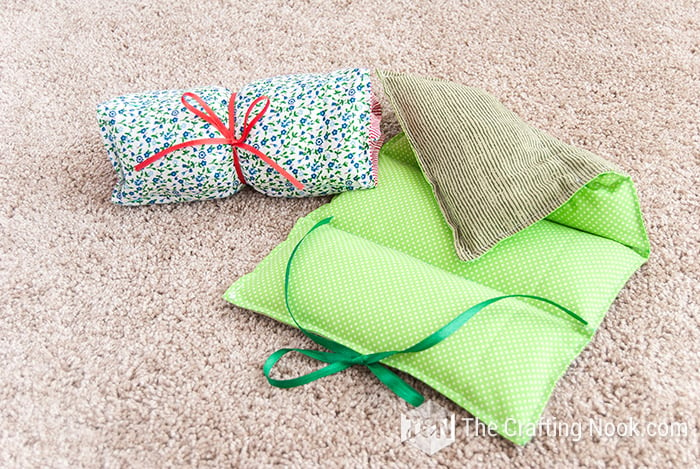
How to Make a DIY Rice Heating Pad
I made mine about 12 x 6 inches and divided it into four sections. The separate pockets help keep the rice spread evenly, which makes the heating pad much nicer to use.
Let’s go!
Supplies:
- Cotton fabric – I used scrap pieces I already had, 2 different ones, one for each side. Just make sure it’s 100% cotton, especially if you’ll be heating it in the microwave.
- Uncooked white rice – Regular rice works great, but you could also use flaxseed or barley if you prefer. I used about 1 to 1¼ cups per section, adjusting as needed so the pad stays flexible rather than tightly packed.
- Ribbon {fabric matching color}
Tools:
- Large funnel
- Sewing Machine – Or a needle and thread if you’re sewing by hand.
- Pins or clips – To hold things in place as you sew.
- Scissors
- Fabric (mark-and-be gone) markers.
Quick Safety & Use Notes
While heating pads are generally safe, there are a few precautions to keep in mind:
- Use 100% cotton fabric and thread.
- Keep the rice and heating pad completely dry.
- Start with 30 seconds in the microwave, then continue in 30-second increments until it feels warm enough.
- Mine usually takes around 1½ minutes total, but microwave wattage varies, so check it after every interval.
- Shake or move the pad gently between intervals to help distribute the heat.
- Always check the temperature before placing it against your skin.
- Never leave it heating unattended.
- Stop using it if you notice scorching, damage, or an unusual burnt smell.
Rice Variation and Alternatives
I used regular uncooked white rice because it’s inexpensive, easy to find, and works well in this type of heating pad. Flaxseed and whole corn are also commonly used in homemade heat packs, but if you want to make mine exactly as shown here, rice is all you need.
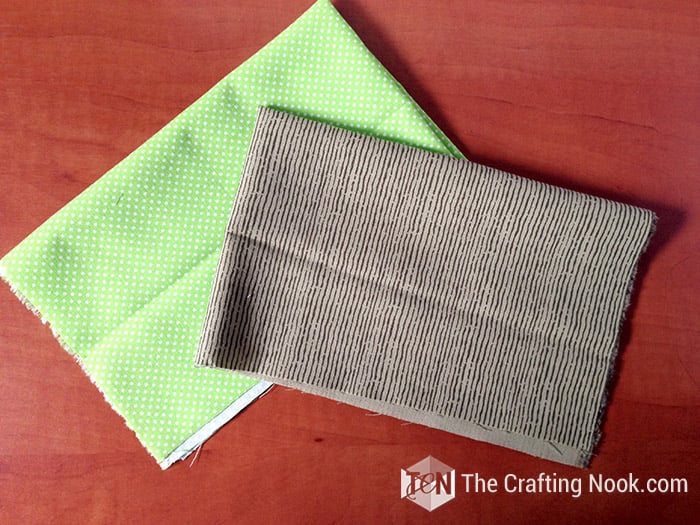
Instructions:
This heat pack is one of the easiest projects I’ve ever made. No fancy tools or expensive materials—just a few simple steps and some basic sewing.
Step 1: Cut the fabric
Cut two pieces of 100% cotton fabric about 30 x 15 cm (12 x 6 inches). They don’t have to be exactly this size, so you can make the pad longer or wider depending on how you want to use it.
Just make sure the fabric is 100% cotton, especially if you’re planning to microwave it. Synthetic fabrics can be a fire hazard.
Step 2: Place fabric right sides together
Lay the two pieces of fabric together with the right sides facing each other. When you turn the heating pad right side out later, the printed sides will be on the outside.
Step 3: Mark the sections and add the ribbon
Mark a 1 cm (about ⅜ inch) seam allowance around the edges.
Divide the pad into four sections and mark the dividing lines. Mine were about 7 cm (2¾ inches) apart.
(This part is just for reference for now—you’ll see why in a sec.)

Now, cut a piece of ribbon about twice as long as your heating pad width.
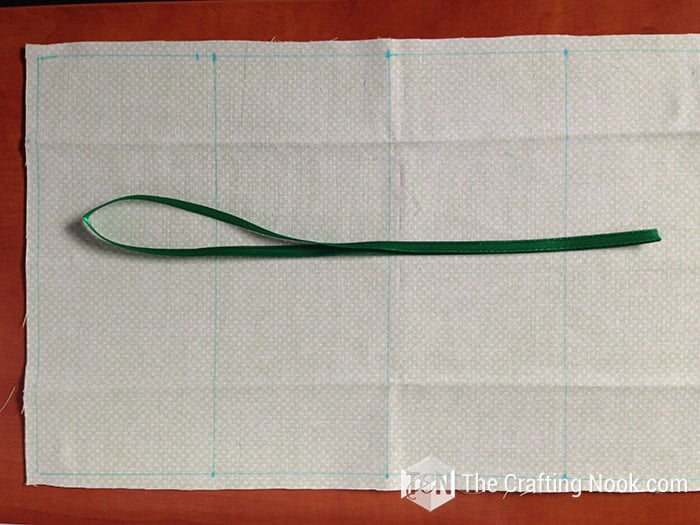
Fold it in half and place it in between the fabric layers, centered along one of the short ends.
Pin it in place. This will be the tie that holds your heating pad when rolled up.

Step 4: Sew, turn, and make the rice pockets
Go ahead and stitch around three sides, leaving one of the long sides open.
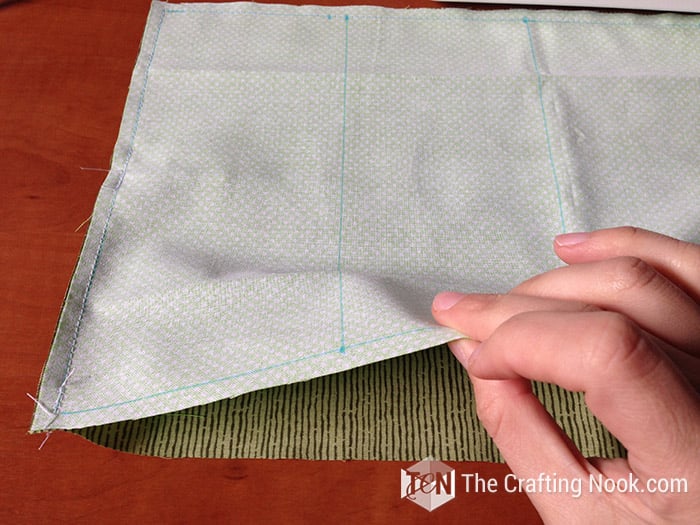
Flip the whole thing right side out and give it a nice press with the iron to flatten everything out.
This is where those reference lines come back in. Since they’re now on the inside, just mark a few dashed lines on top so you can follow them when sewing the pockets later.
Fold in the edges of the open side to create a hem and pin in place. This will make it easier to sew everything up once the rice is added.
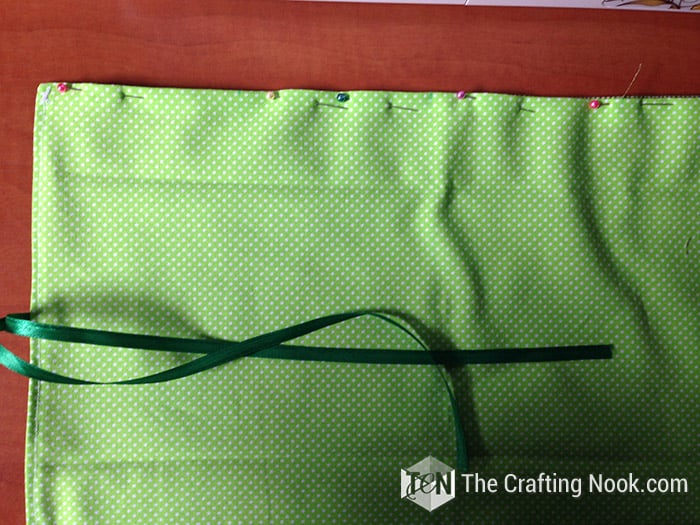
For a neater finish, I like to topstitch around the outside edge. This part is optional, but it gives the heating pad a cleaner finish and helps the edges hold their shape.
Now, go ahead and sew along those marked lines to create the pocket sections. That’s what keeps the rice evenly distributed and makes the heating pad feel so good to use.
You should now have four long pockets that are still open along one end.
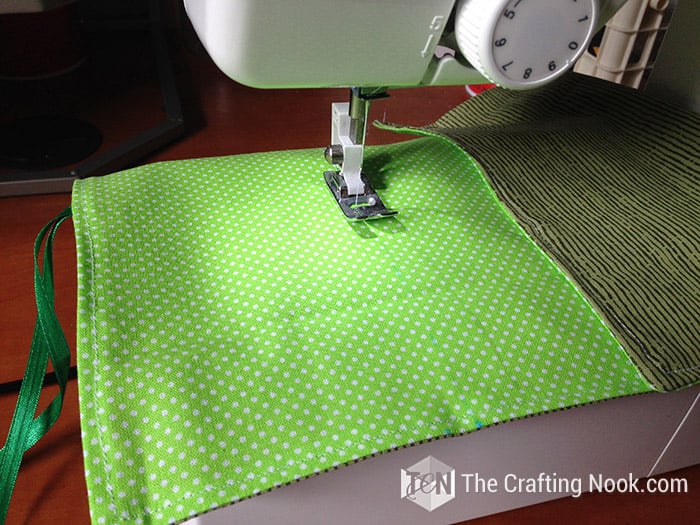
Cut all the remaining threads.
Step 5: Fill the pockets with rice
Using a funnel, add about 1 to 1¼ cups of uncooked rice to each pocket. I originally used close to 1 kg of rice total, although I didn’t measure it precisely when I made this pad.
Don’t pack the pockets tightly. Leave enough room for the rice to move around so the heating pad stays soft and can bend around your lap, shoulders, or tummy.
Step 6: Sew the opening closed
After filling the pockets, push the rice away from the open edge and pin across the top to keep it out of the way while you sew. I somehow managed to make this project without photographing that step, but the pins simply keep the rice away from your stitching line.
Once they’re all filled and pinned, sew across the opening, backstitching at both ends for extra strength.
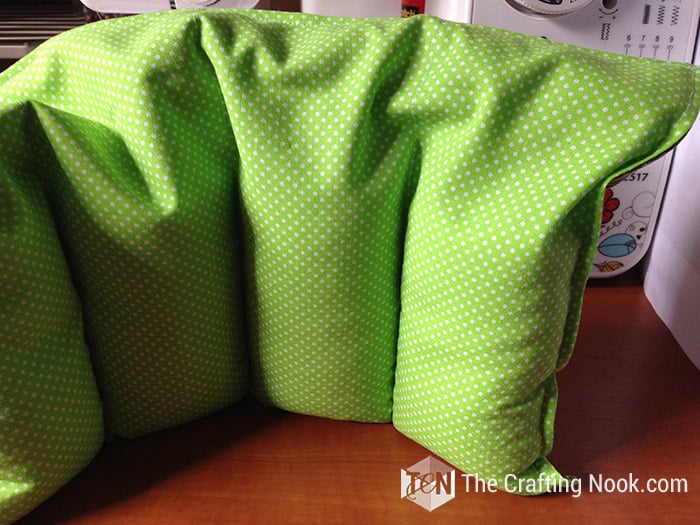
Remove the pins, let the rice settle, and smooth everything out.
Step 7: Finishing touches
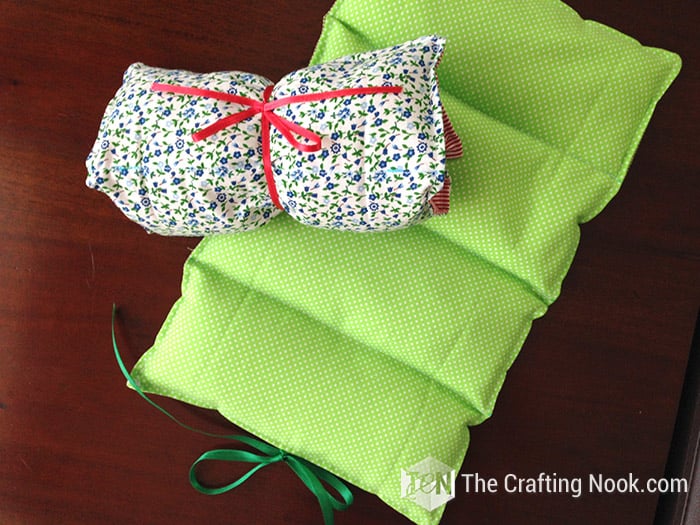
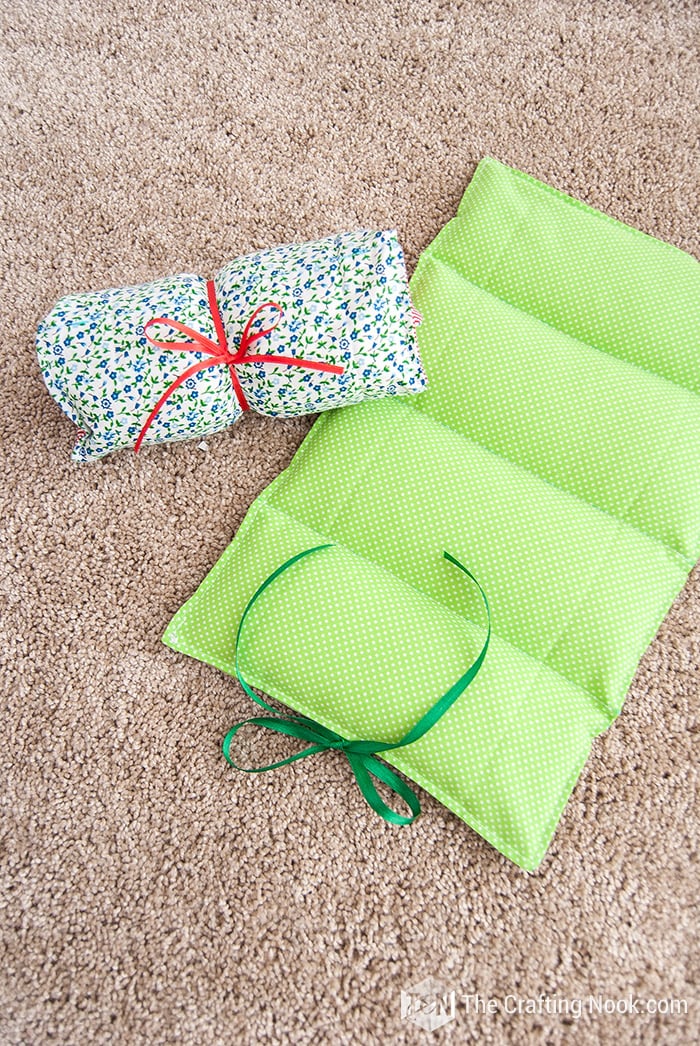
Roll your homemade DIY heating pad and tie it up with that ribbon you added earlier. Make a cute bow and that’s it—your cozy, microwavable heating pad is ready to use!
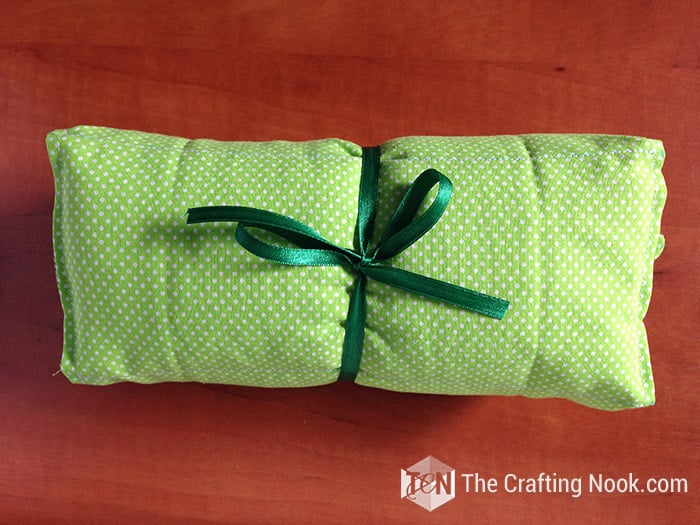
I’ve made these in a few different fabrics over the years, and they also make really sweet handmade gifts. Roll one up, tie the ribbon, and it’s ready to give.
Crafting Tips
A few little things make a bigger difference than you might expect:
- Don’t overfill the pockets. The rice needs room to move or the pad becomes stiff and uncomfortable.
- Reinforce the closing seam. This edge gets more stress than the others, so I backstitch at both ends.
- Stick with woven cotton. It’s easy to sew, holds its shape well, and is what I use for a microwaveable heating pad.
- Make a removable cover if you want to wash it. The rice insert itself shouldn’t be washed, but you can make a simple cotton envelope cover and wash that separately.
Other Ways to Make a Homemade Heat Pack
Once you know how to make the basic version, you can easily change the size and shape.
- Neck and shoulder pad: Make it longer and narrower so it can wrap around your shoulders.
- Small hand warmers: Make mini square versions that fit inside coat pockets.
- Larger heating pad: Increase the overall size and add more stitched sections to keep the rice distributed.
- Quick rice sock: For a no-sew version, fill a clean 100% cotton sock with uncooked rice and securely close the end.

Frequently Asked Questions
I heat mine in 30-second increments and it usually takes around 1½ minutes total. Microwave wattage varies, though, so check the pad after every 30 seconds and stop once it feels comfortably warm.
My 12 x 6-inch heating pad uses close to 1 kg of uncooked rice, or roughly 5 cups total. I divide that between four pockets, using about 1 to 1¼ cups in each. You don’t need an exact amount. The important thing is not packing the sections so tightly that the rice can’t move.
I don’t wash the rice-filled insert because the rice needs to stay dry. If you want something washable, make a removable 100% cotton cover and wash that separately.
Mine have lasted a long time when kept dry and stored properly. Replace yours if the fabric becomes damaged or the filling develops an unusual smell or shows signs of scorching.
More Sewing Projects to Try
If you enjoyed this fun DIY Heating Pad tutorial, you might also love these other cute sewing project ideas too:


If you make your own rice heating pad, I’d love to know how you use yours. Leave me a comment below or tag me on Instagram so I can see it!
✂️ Tutorial

Homemade DIY Heat Pack Tutorial

Tools
- Sewing Machine
Supplies
- Your favorite fabrics. I used 2 different ones one for each side.
- Ribbon {fabric matching color}
- Regular rice
- Large funnel
- scissors
- fabric mark-and-be gone markers.
- Essential oils *optionl.
Instructions
STEP 1: CUT THE FABRIC
- First, cut your fabric to the desired size. Mine was 30×15 cm {12X6 Inches}. It’s a large homemade heating pad.
STEP 2: CREATING THE HEAT PACK MAIN BAG
- Then putting together the front and back pieces right sides together, trace your layout.
- I left 1cm (1/4 inch) seam allowance from the edge on each side and traced lines every 7 cm (2.75 inches). This will make the rice pockets.
- Or course this will be only for reference you will see why in a bit.
- Cut a string of ribbon about double the length of your heat pack.
- Fold in half.
- view of string of ribbon on open fabric marked with measurements
- Place it in between both fabrics lengthwise about in the middle of one of the short sides.
- Pin in place.
STEP 3: SEWING THE PACK
- Stitch along the sides leaving one long side open.
- Turn it right side out. Press.
- This is where I was talking about the reference.
- Your lines are now inside but you can make a few dashes so you know where to stitch.
- Fold your open side edges inwards to make a hem. Pin in place.
- I do this because it’s easier to fill each pocket and then stitch them close later.
- Stitch around the edges again (french seam) to make it look prettier.
- Stitch each pocket’s lines.
- Cut all the remaining threads.
STEP 4: FILLING UP THE HEAT PACK
- Using a large funnel fill 3/4 of each pocket with white or jasmine rice.
- Optionally you can add a few drops of essential oils in each pocket
STEP 5: CLOSING UP THE HEATING PAD
- Using a pin, Close each pocket really close to the top of the rice. Sorry I completely forgot to take a picture of this step. But once you have filled a pocket just press all the rice down press closing the pocket right where the rice is and pin. This is only to make it easy to stitch close the heat pack.
- When you are done filling the pockets and pinning each one, just stitch along the edge.
- Remove the pins and let the rice spread.
STEP 6: FINISHING UP THE CUTE HEAT PACK
- Roll the heat pack and tie it with your ribbon and make a cute bow.
- There you go! You are done! You can make more in different colors.
Share and PIN Me!

Til’ next time…

The Home Sewing Project Binder
Keep Your Sewing Projects Organized
If you are working on more sewing projects, my Printable Sewing Binder gives you one place to keep measurements, fabric information, project notes, supply lists, and plans. It is especially useful when you want to repeat a project later but cannot remember which fabric, needle, measurements, or adjustments you used the first time.
Love this pattern! I’m quickly sewing some up now for Christmas Presents. How long should you microwave the heat pack for approx? I wanted to add a cute tag that has instructions ;)
Thank you so much. It will definitely depend on the size you make it. This one takes about 2 minutes (it also depends on the Microwave power). I would suggest starting with one minute and then heat 30 sec batches until you like the temperature. I made these as gifts and my dad told me he usually puts 2 min on his mic and it has lasted for over 2 years. I’ll probably have to change the rice for him soon LOL.
Hope this helps.
Hugs
I don’t have a microwave. How am I supposed to heat this?
Hi Deanna,
Thank you for stopping by. My dear, the answer is easy, Don’t make This particular heat pack. As you can see, it’s a tutorial to make these and of course the people likely to make them are those who have microwave or to give away as a gift. It’s completely up to each person. Hope this helps!
Hugs
Hey there! I loved these heat packs, they’re adorable and really easy to make (and they’re pretty useful for relieving cramps).
Hi, I opened a different browser and was able to copy and paste easier. Thank you for all of the cute projects and everything!! Great fun and great site!
Hi!! Great post! I would love to print, but find no easy way to do it. Tried “copy” but am having a hard time copying to paste in different program. Any ideas!! I like to have a visual on paper to do this, even though it i pretty much self explanatory! Thank you!