

Macrame Basics for Beginners with Supplies, Cords and Knots

This post may contain affiliate links. Please read our Disclosure Policy.
Macrame is one of those crafts that looks complicated at first, but once you learn a few basic knots, it becomes surprisingly simple and relaxing.
With just some cord and a handful of knots, you can create beautiful things for your home like plant hangers, wall hangings, jewelry, and even functional pieces like shelves or hammocks.
If you’re completely new to macrame, this guide will walk you through the basics so you understand the supplies, cord types, and simple knots used in most beginner projects.
Once you understand these fundamentals, starting your first macrame project becomes much easier.
Table of Contents
What Is Macrame?
Macrame is a craft that uses knots to create decorative and functional textiles. Instead of knitting or weaving with needles or looms, macrame is made by tying different knots with cord or rope to form patterns.
With just a few basic knots, you can create many kinds of projects such as plant hangers, wall hangings, jewelry, bags, curtains, and other home decor.
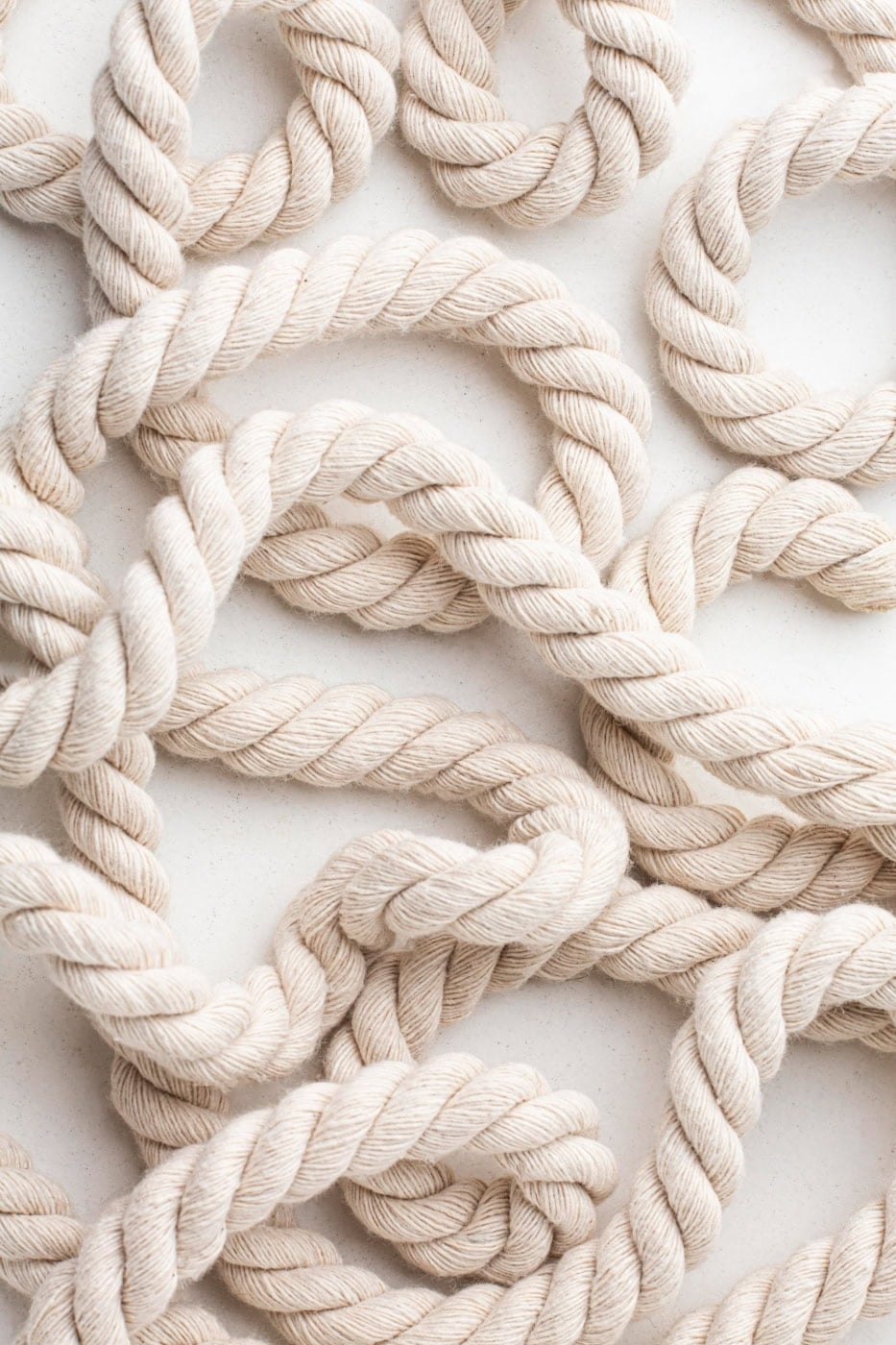
Many macrame designs look complicated, but most beginner projects only use a handful of simple knots repeated in different ways.
A short history of macrame
According to Britannica, macramé, also spelled Macrame, (from Turkish makrama, “napkin,” or “towel”), coarse lace or fringe made by knotting cords or thick threads in a geometric pattern.
Macramé was a specialty of Genoa, where, in the 19th century, towels decorated with knotted cord were popular. Its roots were in a 16th-century technique of knotting lace known as punto a groppo.
In the 1960s macramé became a popular craft and creative art technique in America and in Europe. Macrame is having a comeback moment.
This art of weaving and knotting regained popularity in the 1970s as wall hangings, clothing, and home goods such as plant hangers, plant pot hangers, lampshades, hammocks, window coverings, and wall hangings.
Today macrame has made a strong comeback thanks to DIY culture and modern boho-style home decor.
Basic Macrame terminology
Before starting a project, it helps to understand some common macrame terms.
- Row: A line of knots side by side, each tied with a different working cord.
- Alternating Cords: This happens when cords from two neighboring knots are combined to create a new knot below them. This technique is often used to form diamond patterns.
- Filler Cords: The cords that are in the center of the knotting cords. They stay mostly straight while the outer cords tie around them.
- Holding Cord: The object that anchors your project while you work, such as a ring, dowel, branch, or stick.
- Knotting Cords: The right and left cords that are used to tie knots over filler cords.
- Working Cords: All cords in a design, those that do the tying (knotting cords), and the ones that are tied around (filler cords).
- Wrapping Cord: The cord used to gather and wrap a group of cords. You’ll see this at the top of a plant hanger.
Macrame Supplies You Need
Macrame doesn’t require many tools, which is one reason it’s such a great craft for beginners.
To start a macrame project there are some supplies you cannot start without and some that are completely optional depending on the design and your taste.
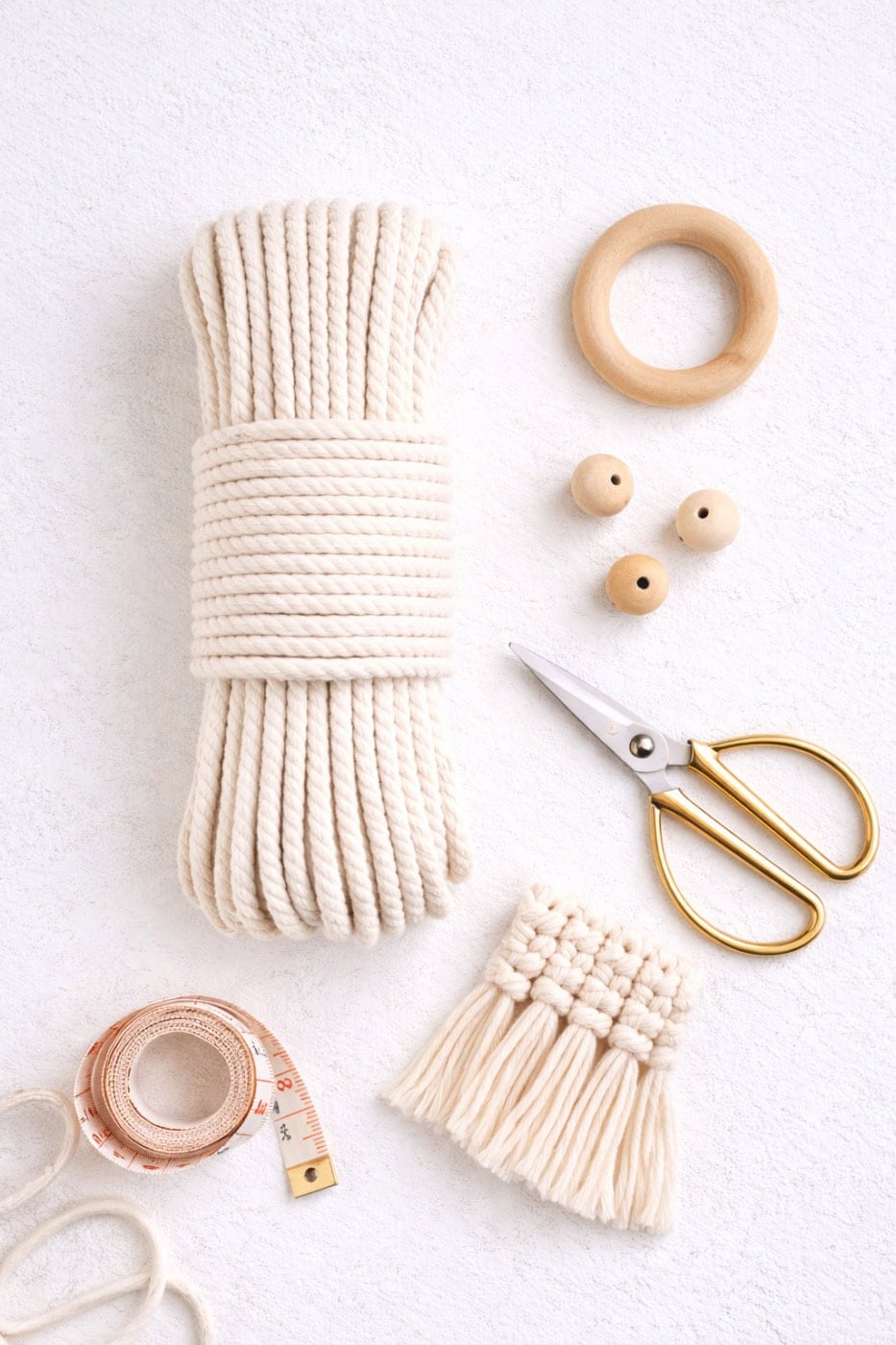
The basic supplies include:
- Macrame cord or rope
- Sharp scissors
- Measuring tape
Optional ones
Depending on the design, you may also use optional materials such as:
- Wooden rings or metal rings
- Wooden dowels or sticks
- Decorative beads
- Ribbons or other embellishments
For larger projects
Some tools can make your work easier, especially for larger projects:
- T-pins
- Rubber bands
- Macrame boards
- Crochet hooks
- Embroidery needles
These are optional, but they can help keep cords organized while you work.
Types of Macrame Cord
Macrame cord comes in several different styles. Each one behaves a little differently when you knot it.
Macrame Cord
Macrame cord is usually a tightly braided cotton cord made from tightly braided six-strand (or sometimes more) cotton cord separated into sections twisted around each other. It is sturdy and strong, which makes it great for structural projects.
However, it does not brush out easily if you want to create fringe.
Macrame Rope
Macrame rope is commonly 3-strand rope (or sometimes four) where the strands are twisted around each other. It’s stronger than macrame string but softer than cord.
It can also be brushed out to create a soft wavy fringe.

Macrame String
Macrame string is usually a single-strand twisted cord. It’s much softer than macrame rope, and creates smaller, tighter knots. It’s also much more prone to expansion and uneven thickness.
It brushes out beautifully for fluffy fringe but can sometimes stretch more than other cords.
You can also experiment with other materials like jute, hemp, yarn, cotton jersey, or twine depending on the style of project you want to make.
What Size Macrame Cord Should You Use?
Macrame cords and ropes come in such a wide variety of sizes/diameters, some more suitable for certain projects than others.
Choosing the right size depends on the project.
Smaller Ropes, 3mm or less work wonderfully for jewelry, as well as projects that are small or delicate.
Medium Ropes would be the winners, 4mm-7mm are perhaps most commonly used, a great size for macrame beginners, sturdier than the smaller ropes, and the perfect size for plant hangers like this one, wall hangings, furniture, lanterns, curtains, rugs, etc.
Large Ropes, 8mm-12mm (and bigger) make a visual statement, bold textures and are so fun to work with particularly for plant hangers, wall hangings, and other home decor. They can be a bit more challenging to work with because of their size, but worth the effort.

Thicker cords create bigger knots and a chunkier look, while thinner cords create finer details.
Where to buy the macrame cords or ropes?
Macrame cord can be found in many craft stores and online shops.
Some common places include craft stores like Michaels, Hobby Lobby, Blick Art Materials, Walmart, and even home improvement stores such as Home Depot or Lowe’s.
You can also find a wide variety of macrame cords online on Etsy or Amazon.
Specialty macrame stores are another great option. These are almost always small businesses, so you’re supporting creators and entrepreneurs directly. It may take longer for products to ship and restock, but it’s more than worth the peace of mind.
How to measure the cord?
A good rule when measuring macrame cord is to cut a piece that is about four times the final length of your project.
If your cords will be folded in half to attach using a lark’s head knot, you may need up to eight times the finished length.
According to Macrame for Beginners, when estimating the length of your cord, you should look at the pattern first and follow these tips:
- If your pattern consists of many knots, you will probably need more rope
- When your pattern consists of many straight cords, you can cut the rope a bit shorter
- The thicker the cord, the longer it needs to be
- Braided and 3-ply ropes take up more length per knot than a single strand cord
- When in doubt, always cut more rope than you think you need
- Always estimate extra cord to create a fringe at the end
Basic Macrame Knots
Many macrame projects only use a few simple knots repeated in different patterns.
Lark’s Head Knot
Sometimes referred to as a Cow Hitch Knot.
This knot is what gets your macrame cords attached to an object, such as dowel, branch, or an anchor.
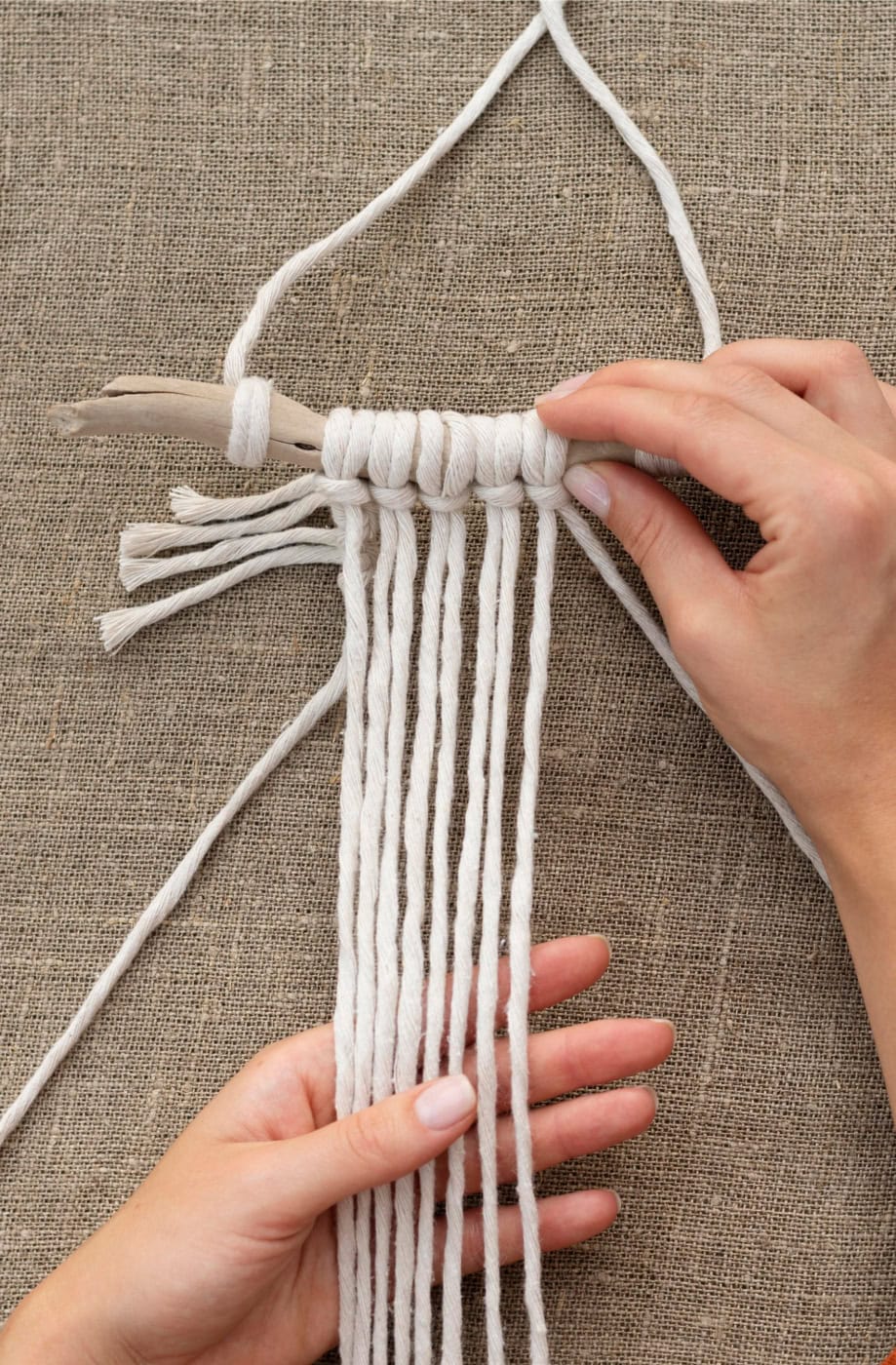
Fold your cord in half and place the loop over the dowel rod. Bring the loop around the back and pull your two cord ends through the loop to tighten.
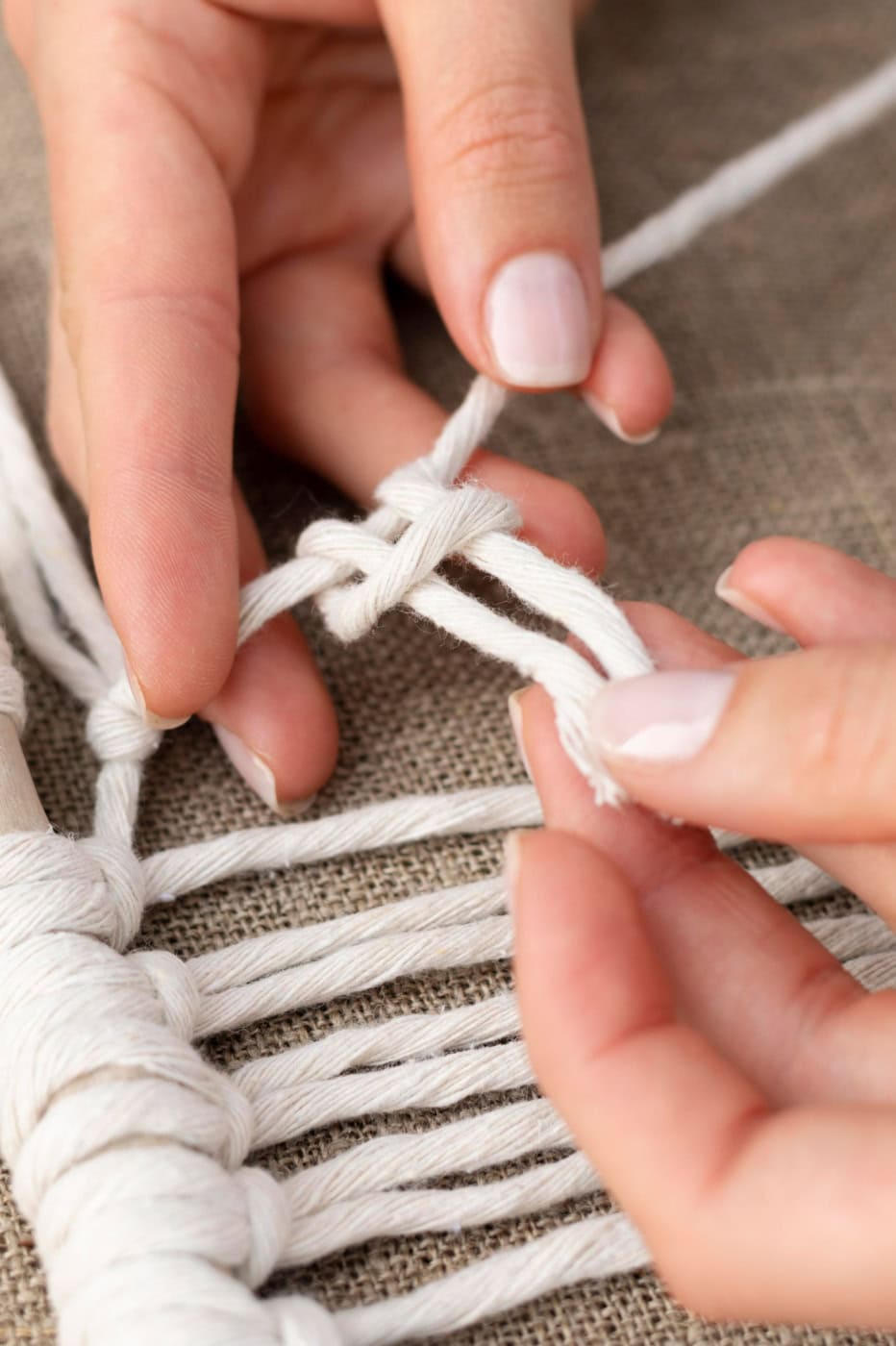
Reverse Lark’s Head Knot
A Reverse Lark’s Head Knot is done in the reverse, so the bump is hidden in the back of the knot.
Fold the cord in half and place the loop under the dowel rod. Bring the loop round to the front and pull your two cords through the loop to tighten.
Square Knot
A square knot is one of the most widely used macrame knots and it can be created as left facing or right facing.
Square knots need to have at least 4 cords but can have more. Two outer working cords and two center filler cords. The outer cords tie around the filler cords to create the knot.
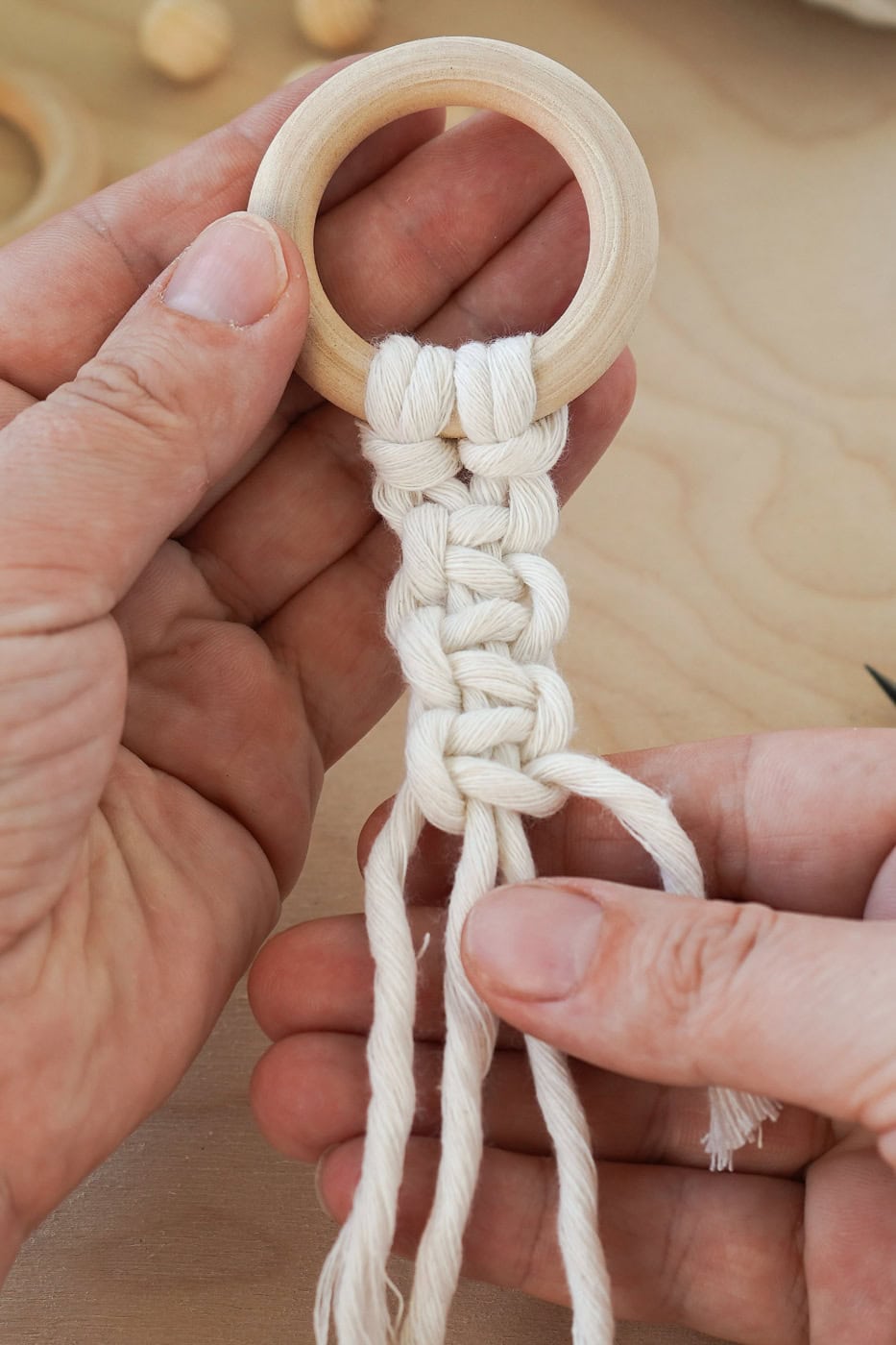
Square knots are often repeated in rows to create patterns.
Half Knots
A half knot is simply half of a square knot. It can be right facing or left facing, depending on which side you start on. When repeated in the same direction it creates a spiral pattern.
These basic knots are enough to create many beginner macrame projects.
Setting Up a Simple Macrame Workspace
Before starting a macrame project, you need a place to anchor your cords while you work.
For small projects, you can use simple items like:
- a clipboard or corkboard with pins
- a macrame board
- tape to hold cords in place
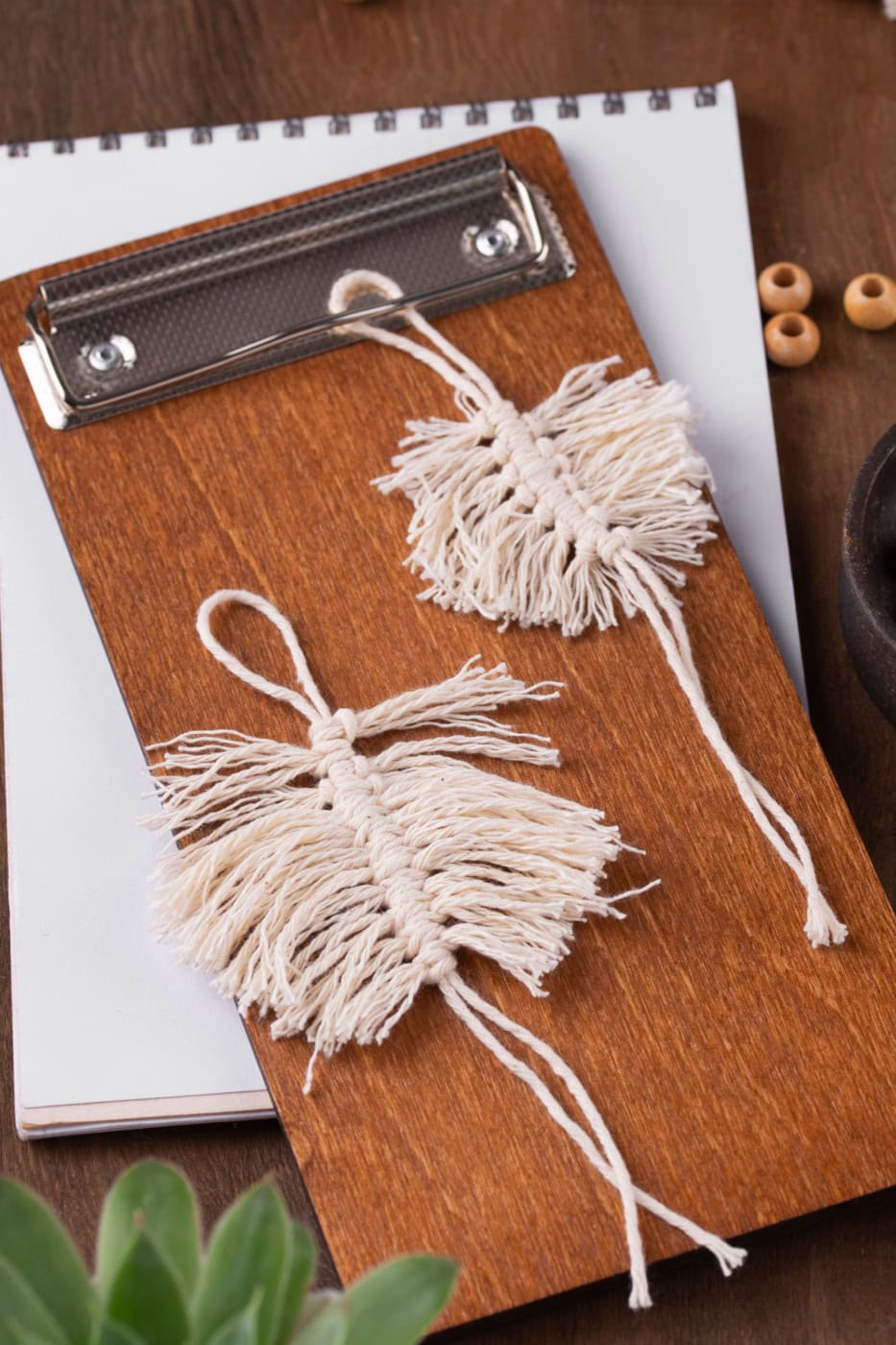
For larger projects like wall hangings or plant hangers, many people use:
- a clothing rack with S-hooks
- a curtain rod
- a sturdy chair or ladder
- a wooden dowel clamped to a table
The goal is simply to keep your cords hanging straight and easy to work with.
Common Macrame Beginner Mistakes
When you first start macrame, a few things can make projects harder than they need to be.
- Cutting cords too short
Always cut a little more cord than you think you need. Running out of cord in the middle of a project is frustrating. - Uneven knot tension
Try to keep the knots at a similar tightness so your rows stay even. - Not measuring rows carefully
If you skip measuring the spacing between rows, your design may become uneven. - Trimming fringe too early
It’s best to trim the fringe at the very end once the whole piece is finished.
Easy Macrame Projects for Beginners
Once you learn a few basic knots, you can start experimenting with simple projects such as:
- plant hangers
- small wall hangings
- keychains
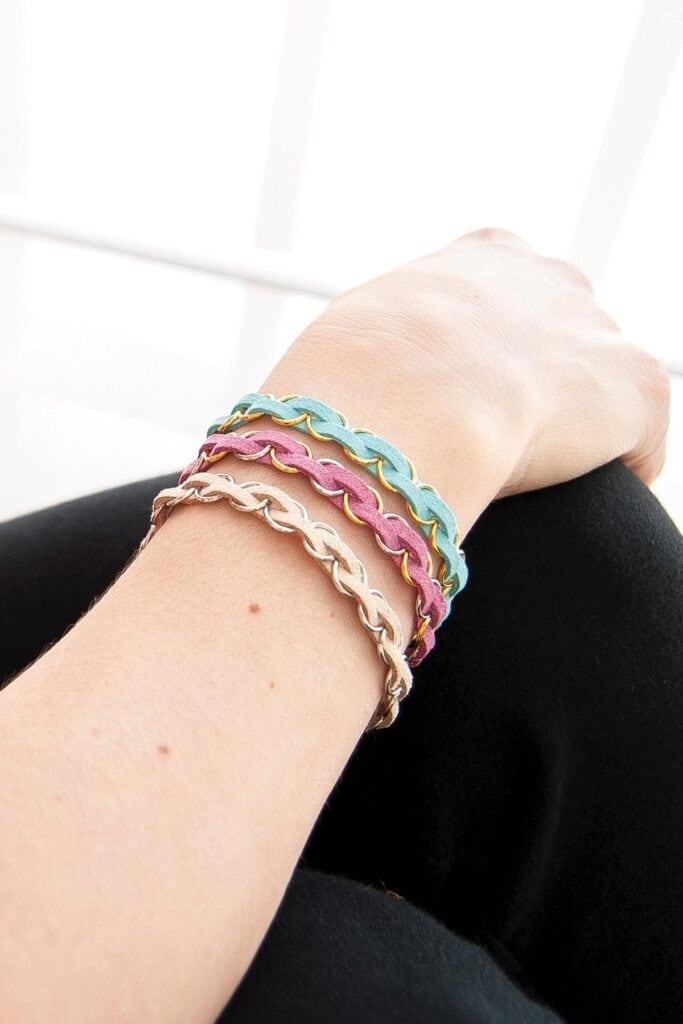
- friendship bracelets
- bag straps

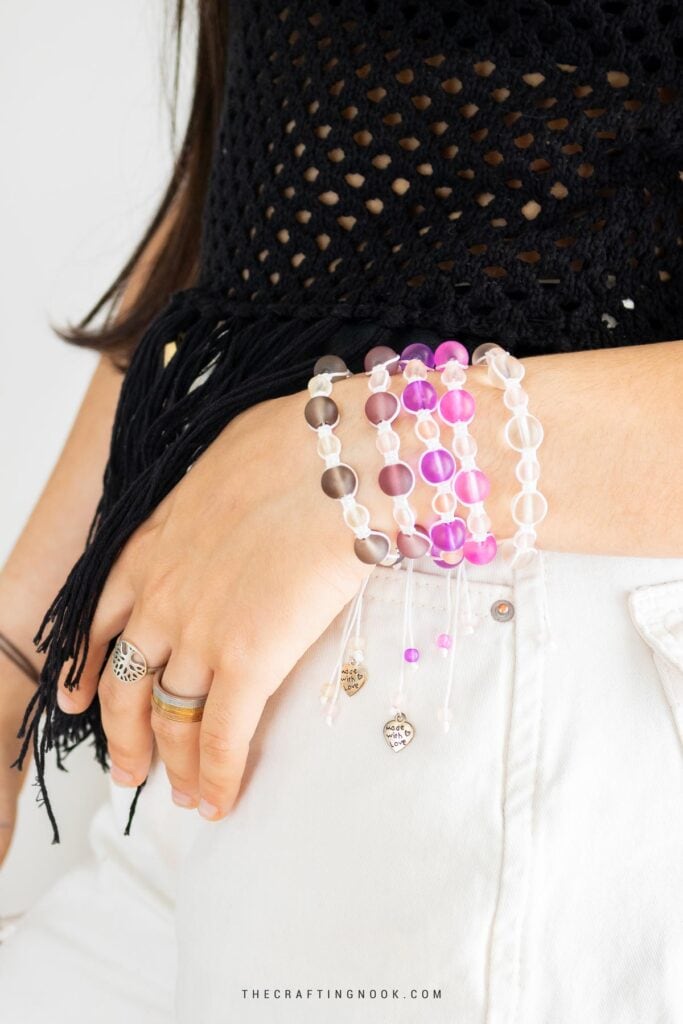
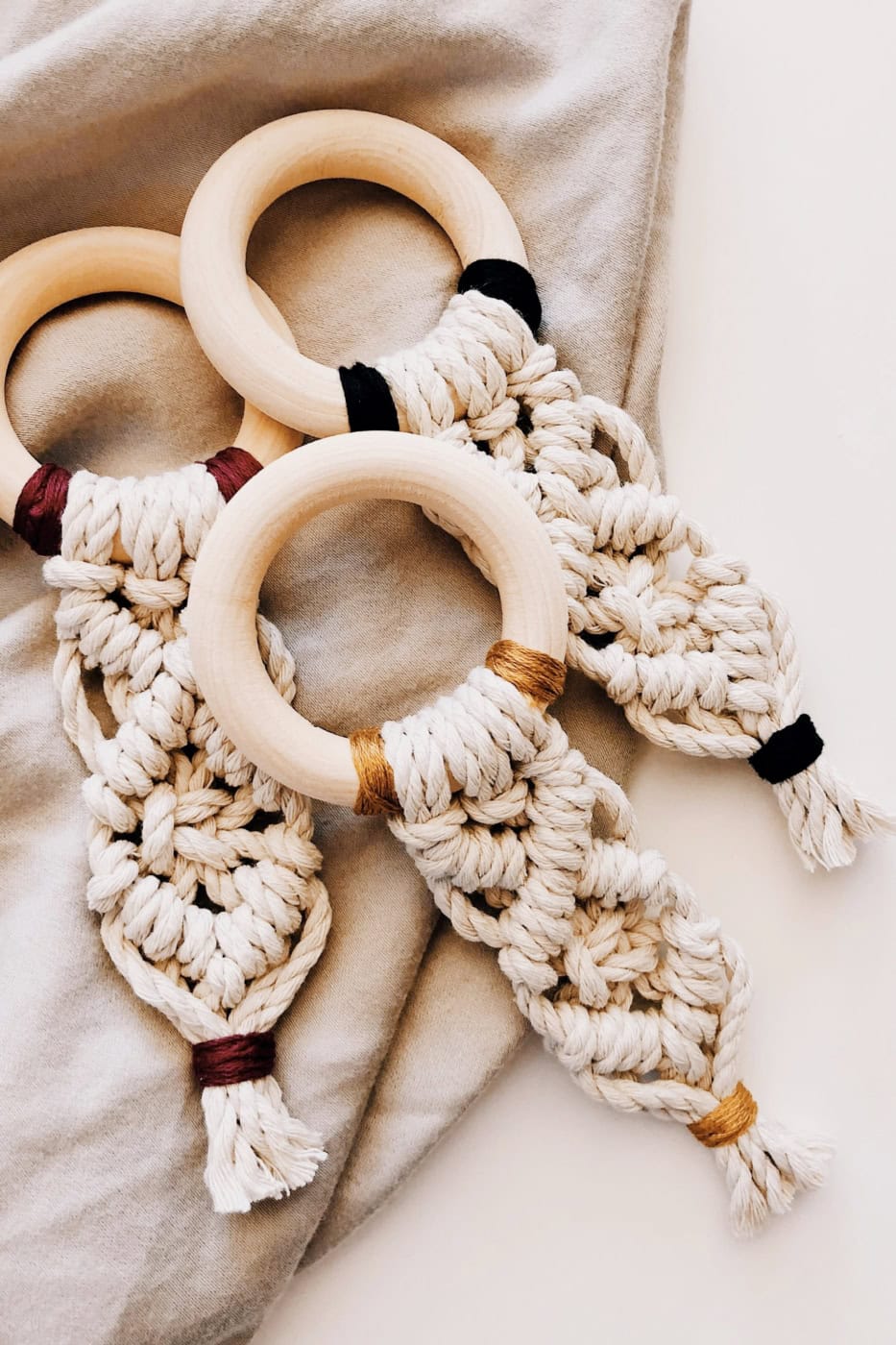
These projects usually use only a few basic knots repeated in different patterns.
Crafting Tips
Tips for Practicing Macrame Knots
- When you’re learning macrame, it helps to practice a few knots before starting a full project.
- Try cutting a few cords and attaching them to a small stick or dowel. Practice tying square knots and half knots until the movement feels comfortable.
- Once the knots become natural, starting a real project becomes much easier.
Ready to Try Your First Macrame Project?
Once you understand the basic supplies and knots, macrame becomes much easier to explore.
If you want to try a beginner-friendly project, you can follow my tutorial on how to make a DIY macrame plant hanger, which uses only a few simple knots.
Frequently Asked Questions
Not at all. Many macrame projects look complicated, but most designs use only a few basic knots repeated in different patterns. Once you learn knots like the lark’s head knot and square knot, you can already create many beginner projects.
Cotton macrame cord between 4 mm and 5 mm thick is usually the easiest for beginners. It is soft, easy to knot, and thick enough to clearly see the pattern while you work.
A common rule is cutting cord about four times the finished length of the project. If the cord is folded in half to attach with a lark’s head knot, you may need six to eight times the final length.
Simple projects like plant hangers, keychains, or small wall hangings are great beginner projects because they use only a few basic knots.
Most people can learn the basic knots in just a few hours. After that, it simply becomes a matter of practice and trying different patterns.
More Crafts Project Ideas to Try
Loving this Macrame Basics for Beginners with Supplies, Cords and Knots Guide? You might also love these other Fun Crafty Projects too:
Til’ next time…

FREE WORKBOOK
Keeping your Sweet Home Organized
Learn how to create intentional habits and simple routines to Keep Your Home Organized. Plus freebies, printables, exclusive content, and tips.
Disclaimer: By clicking on the “Yes” button above you are giving me your consent to collect and use your information according to the law and My Policy Privacy. Zero Spam I promise!